
Zara
Serving: Mazaydaar Achar with dal chawal (lentils and rice)
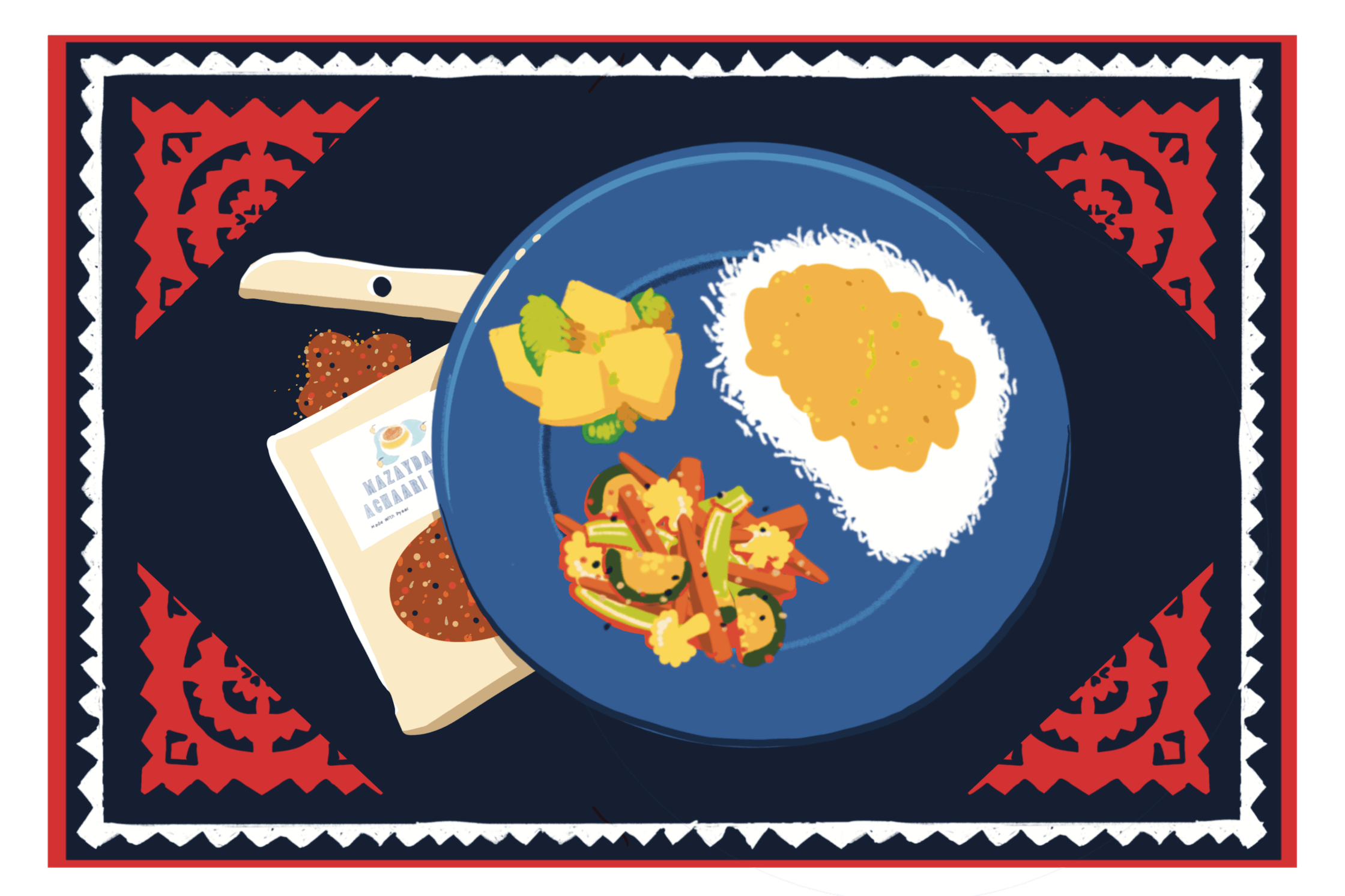
Artwork by Rami KD
Hear their story
Read the transcript
-
Zara: Food to me is like, this is so dramatic, but it's the reason I wanna live. You know? Like there's a lot of great things about living in this world, but, for a lot of us, like, just existing feels really hard. I just don't feel that way when I'm eating a really good bowl of biryani. The flavors just like, activate my brain.
My name is Zara, Zara Amad. I was born in Karachi, Pakistan in 1987 and two years after I was born is when we immigrated to California.
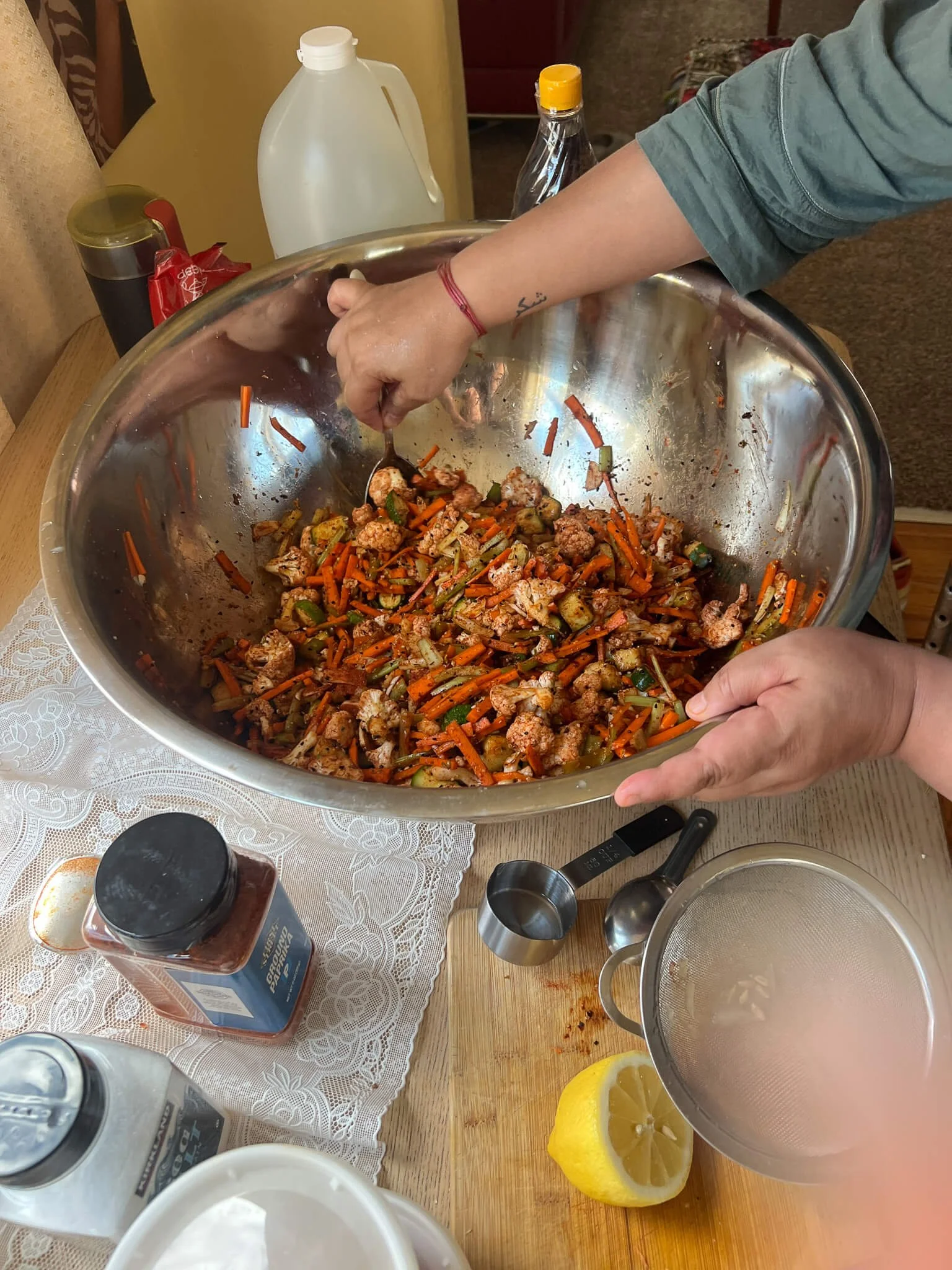
The last condiment that you always want to serve with biryani is achar, which is like a pickled mango or pickled vegetables. Very tart, spicy, savory, delicious, amazing. You know, Achar you can get at the store for like three dollars in a jar and it's quite accessible. But to actually make it yourself and understand all the work that goes into it. In my mind I'm like, oh, it'd be so cool to find like, ideally, like a queer owned, you know, small, achar maker.
An organization that I was volunteering with, they had a silent auction and one of their items was called Mazedar Achar. I bid on it and I won that achar.
Zunaira: And, they really liked it and wanted to connect with me
Zara: And I was like “tell me about this Achar, like how’d you come up with it?” And she's like, “oh, it's my mom's recipe. I gather my family, we make big batches of achar.”
Zunaira: I have early, as a child, memories of my mom, whenever she would visit her mother, they would do these. Then my mom, anywhere she was going to visit relatives, she was taking this with her.
Zara: So I was really touched at her experience around the intergenerational component on her end, how she uses this food as a way to build relationships with her elders. She holds that cultural wisdom of knowing how to make this food item.
Zunaira: Zara, do you want to look at this?
Zara: Yeah.
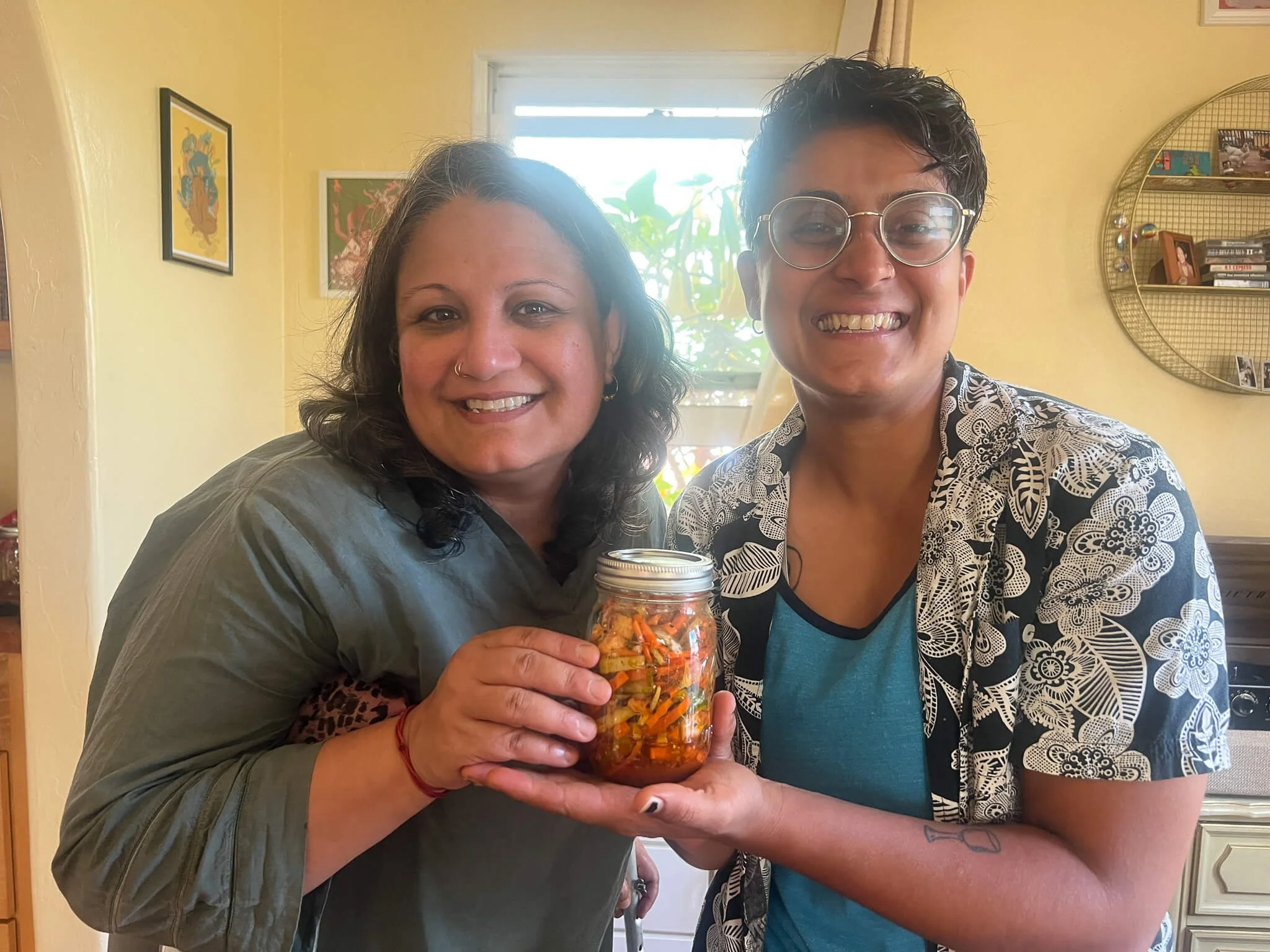
Zunaira: My name is Zunaira Khalid. I am just grateful that today we’re in like a full circle making that same achar that connected us together.
Zara: Aww, that's so sweet.
Zunaira: Grind some of these spices… okay, ready? Okay, that's it.
Zara: That’s it?
Zunaira: Yep…okay, so pretty now…
Zara: Being able to lean into the joy and complexity of food and flavors, she's right there with me. And she's from Pakistan, just a lot of overlap in terms of her connection to her culture, her identities, and her queerness.
Zunaira: I mean this is what really brought us together. It’s like a full frickin’ circle Zara.
Zara: You sent me these quantities before, but I just want to like..
Zunaira: Yeah, yeah, yeah. It’s no problem. So three parts, whatever parts it is, so three parts fennel, one…
Zara: She holds that cultural wisdom of knowing how to make this food item. So the spice blend is her recipe.
Zunaira: This is just going to be all one part, this is tania.
Zara: My mom is really loyal to this brand Shan. They just make a ton of spice blends. I grew up watching her use those, but I never really sat down with individual spices and really thought about them. Or really thought about their stories or where they come from or who's trading them, who's making money off of them. It feels complicated to me because I wanna be righteous and I wanna be thinking about the stories behind all of these things. But then I also see my mom being like, it's not that serious, you know? These are just our flavors. We just need to be able to access them.
Zunaira: Cumin seed. Mmm, smells amazing.
Zara: We would go back to Pakistan a lot as kids. I just feel really grateful, I feel really grateful to have had that connection to home, and to have had that, you know, relationship building with my cousins and, and my family.
Zunaira: We need to add now, little bit of methi dana.
Zara: Through a lot of my adulthood, I figured I have to choose, which one of my cultures do I wanna lean into? Is it my queerness? Is it my South Asian identity? And in the last handful of years, I have found so many people who hold all these identities and it's just like a soothing balm, to like to lean deep into the joy of all of the magic of who we are.
Zunaira: So we got the masala ready.
Zara: You know, when I was a kid and I was craving the blandness of American food and the processed-ness of American food, now it's like the opposite, where it's like, oh, these flavors actually taste like home and they taste like nutrition and care, and comfort.
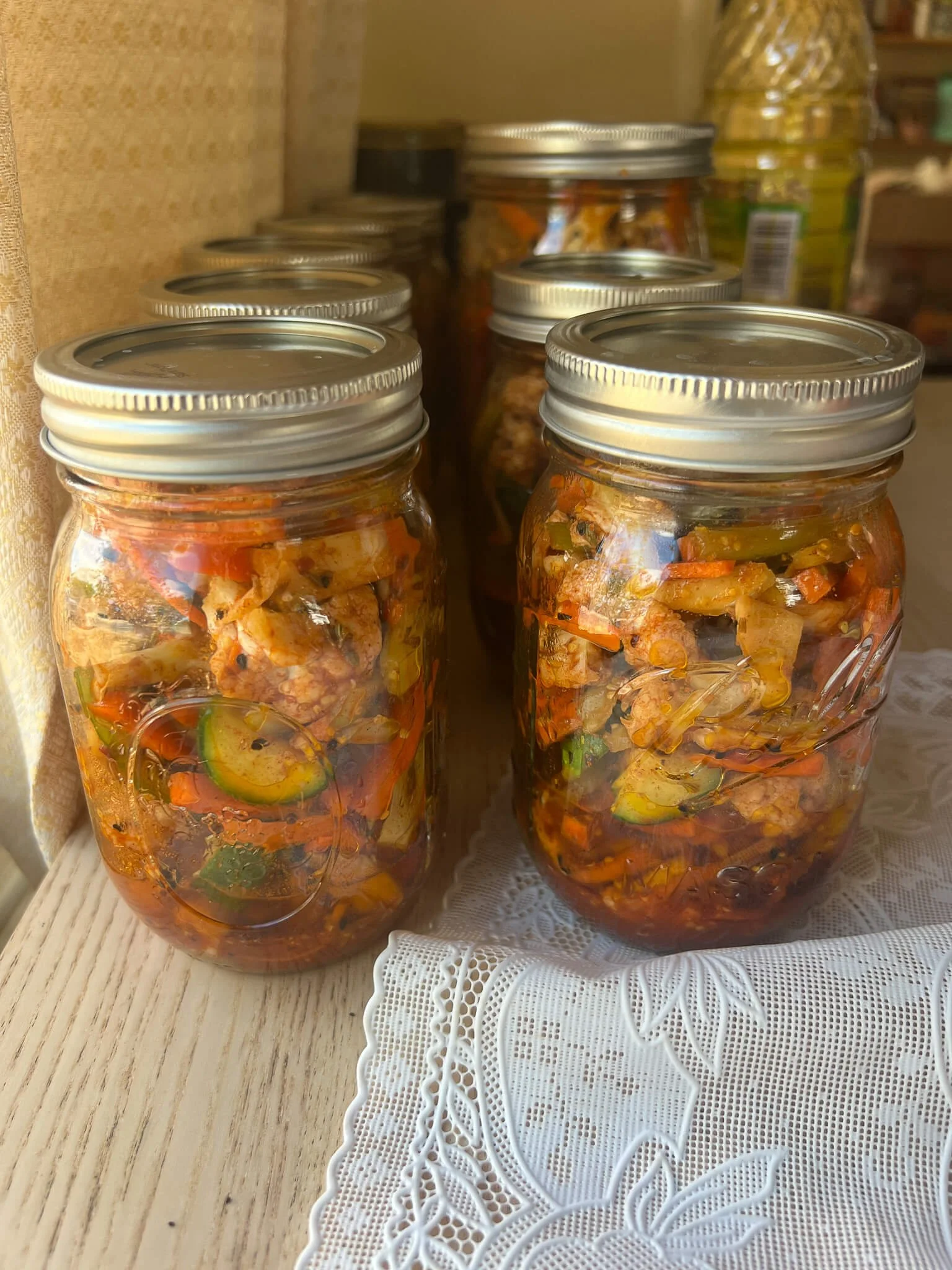
Zunaira: We made achar Zara.
Zara: I know, this is cool. Finally!
Zunaira: Mmhmm.
Zara: What I really value about, like, both, my bio fam, my mom, about Zunaira, about people who I’m connecting with in my culture is we all kind of inherently have that knowing and understanding that food is meant to be free, it's meant to be given generously, and there’s enough.
Zunaira: And that’s it. You got it.
Zara: Oh my god! Our first one. Mustard, baby. Cool, yeah!
-
Zara: La comida para mí es como… esto suena muy dramático, pero es la razón por la que quiero vivir. ¿Sabes? Hay muchas cosas maravillosas de vivir en este mundo, pero, para muchos de nosotros, simplemente existir se siente muy difícil. Yo no me siento así cuando estoy comiendo un plato realmente bueno de biryani. Los sabores simplemente activan mi cerebro.
Mi nombre es Zara, Zara Amad. Nací en Karachi, Pakistán, en 1987, y dos años después de nacer fue cuando emigramos a California.
El último condimento que siempre quieres servir con el biryani es el achar, que es como un mango encurtido o vegetales encurtidos. Muy ácido, picante, sabroso, delicioso, increíble. El achar lo puedes comprar en la tienda por como tres dólares en un frasco y es bastante accesible. Pero hacerlo tú misma y entender todo el trabajo que implica… en mi mente pienso, sería tan genial encontrar, idealmente, a alguien queer que tenga un pequeño negocio de achar.
Una organización con la que yo hacía voluntariado tenía una subasta silenciosa y uno de los artículos se llamaba Mazedar Achar. Hice una oferta y gané ese achar.
Zunaira: Y realmente les gustó y quisieron conectarse conmigo.
Zara: Y yo le dije: “cuéntame sobre este achar, ¿cómo se te ocurrió?” Y ella dijo: “oh, es la receta de mi mamá. Reúno a mi familia y hacemos grandes cantidades de achar.”
Zunaira: Tengo recuerdos de cuando era niña; cada vez que mi mamá visitaba a su madre, hacían esto. Luego mi mamá, dondequiera que iba a visitar familiares, llevaba esto con ella.
Zara: Así que me conmovió mucho su experiencia en torno al componente intergeneracional, cómo usa esta comida como una forma de construir relaciones con sus mayores. Ella tiene esa sabiduría cultural de saber cómo hacer este alimento.
Zunaira: Zara, ¿quieres ver esto?
Zara: Sí.Zunaira: Mi nombre es Zunaira Khalid. Estoy simplemente agradecida de que hoy estemos cerrando el círculo, haciendo ese mismo achar que nos conectó.
Zara: Aww, qué lindo.
Zunaira: Muele algunas de estas especias… ¿lista? Ok, eso es todo.
Zara: ¿Eso es todo?
Zunaira: Sí… ok, ahora se ve muy bonito…Zara: Poder inclinarme hacia la alegría y la complejidad de la comida y los sabores… ella está ahí conmigo. Y es de Pakistán, hay mucho en común en términos de su conexión con su cultura, sus identidades y su identidad queer.
Zunaira: O sea, esto es lo que realmente nos unió. Es como un círculo completo, Zara.
Zara: Me enviaste estas cantidades antes, pero solo quiero…
Zunaira: Sí, sí, sí. No hay problema. Entonces tres partes, lo que sea que uses como medida, tres partes de hinojo, una…Zara: Ella tiene esa sabiduría cultural de saber cómo hacer este alimento. Entonces la mezcla de especias es su receta.
Zunaira: Esto va a ser todo una parte, esto es tania.
Zara: Mi mamá es muy fiel a esta marca, Shan. Hacen muchísimas mezclas de especias. Yo crecí viéndola usarlas, pero nunca me senté realmente con especias individuales ni pensé mucho en ellas. Ni en sus historias, ni de dónde vienen, ni quién las comercia, ni quién gana dinero con ellas. Se siente complicado para mí porque quiero ser justa y quiero pensar en las historias detrás de todo esto. Pero también veo a mi mamá decir: no es tan profundo, ¿sabes? Estos son simplemente nuestros sabores. Solo necesitamos poder acceder a ellos.
Zunaira: Semilla de comino. Mmm, huele increíble.
Zara: Íbamos mucho a Pakistán cuando éramos niños. Me siento muy agradecida, muy agradecida de haber tenido esa conexión con el hogar y de haber construido esas relaciones con mis primos y mi familia.
Zunaira: Ahora necesitamos agregar un poquito de methi dana.
Zara: Durante gran parte de mi vida adulta pensé que tenía que elegir a cuál de mis culturas inclinarme más. ¿Es mi identidad queer? ¿Es mi identidad del sur de Asia? Y en los últimos años he encontrado a muchas personas que contienen todas estas identidades, y es como un bálsamo reconfortante poder sumergirse profundamente en la alegría de toda la magia de quienes somos.
Zunaira: Ya tenemos el masala listo.
Zara: Cuando era niña y anhelaba la simpleza de la comida estadounidense y lo procesado de la comida estadounidense, ahora es lo contrario. Es como, estos sabores en realidad saben a hogar, y saben a nutrición, cuidado y consuelo.
Zunaira: Hicimos achar, Zara.
Zara: Lo sé, esto es genial. ¡Por fin!
Zunaira: Mmhmm.Zara: Lo que realmente valoro de mi familia biológica, de mi mamá, de Zunaira, de las personas con las que me conecto dentro de mi cultura, es que todos tenemos inherentemente ese conocimiento y entendimiento de que la comida está hecha para ser libre, para compartirse generosamente, y que hay suficiente.
Zunaira: Y eso es todo. Ya lo tienes.
Zara: ¡Dios mío! El primero. Mostaza, bebé. ¡Genial, sí!
Special Thanks: Queer Mango Collective @queer.mango.collective