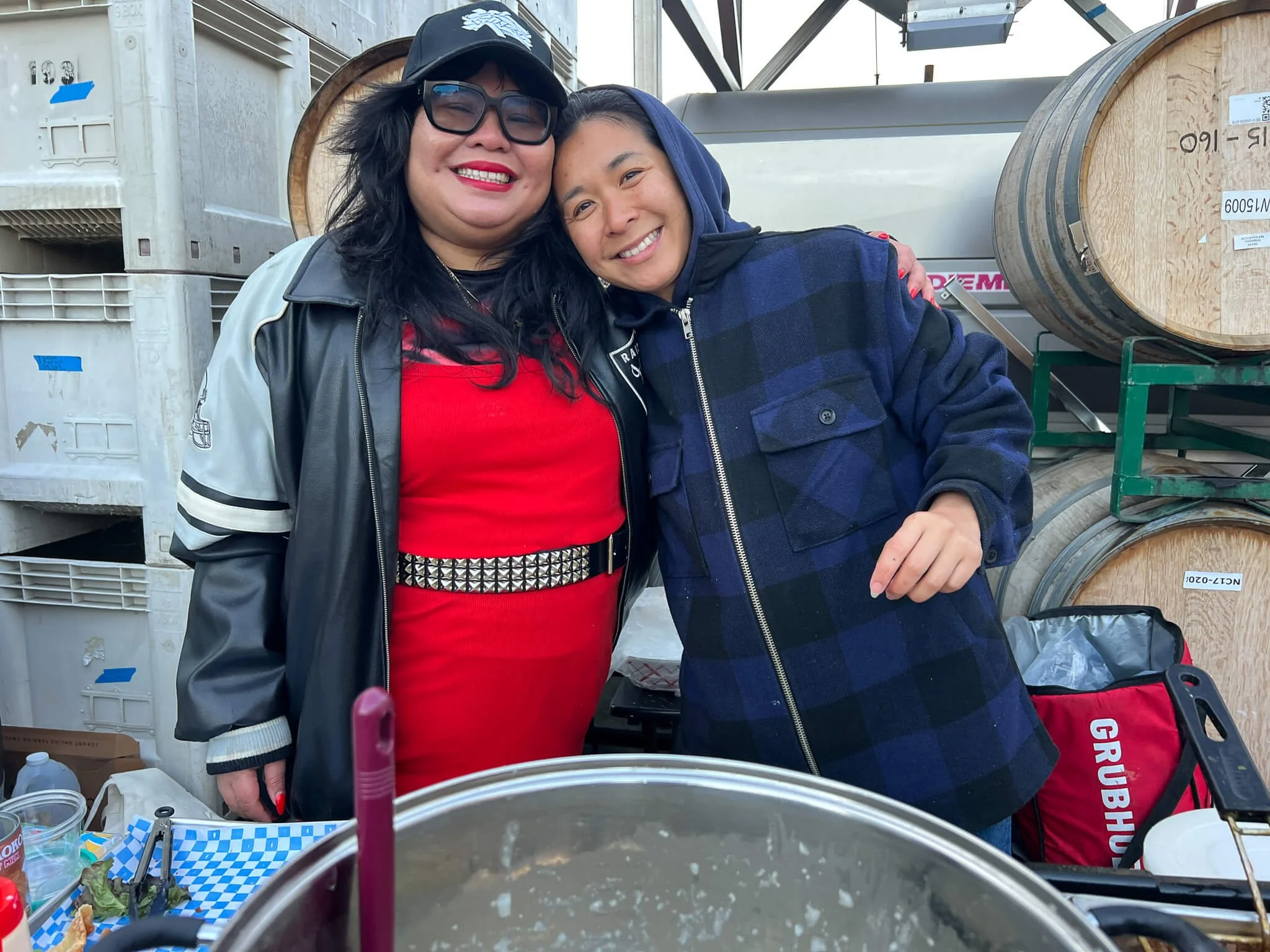
Alina & Nic
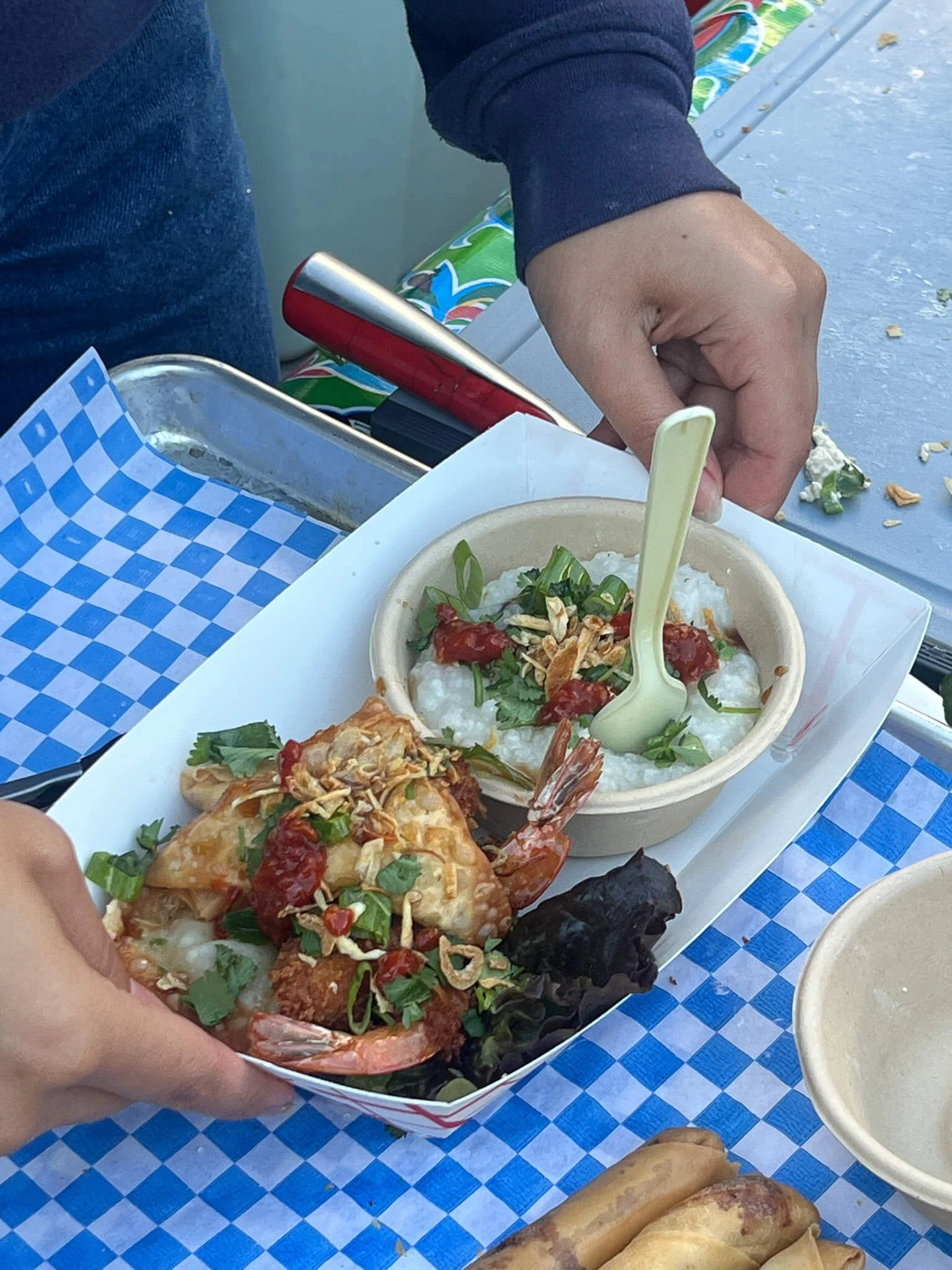
Serving: Coconut Shrimp in a Lettuce Wrap, Rice Porridge Bowl, Halo Halo
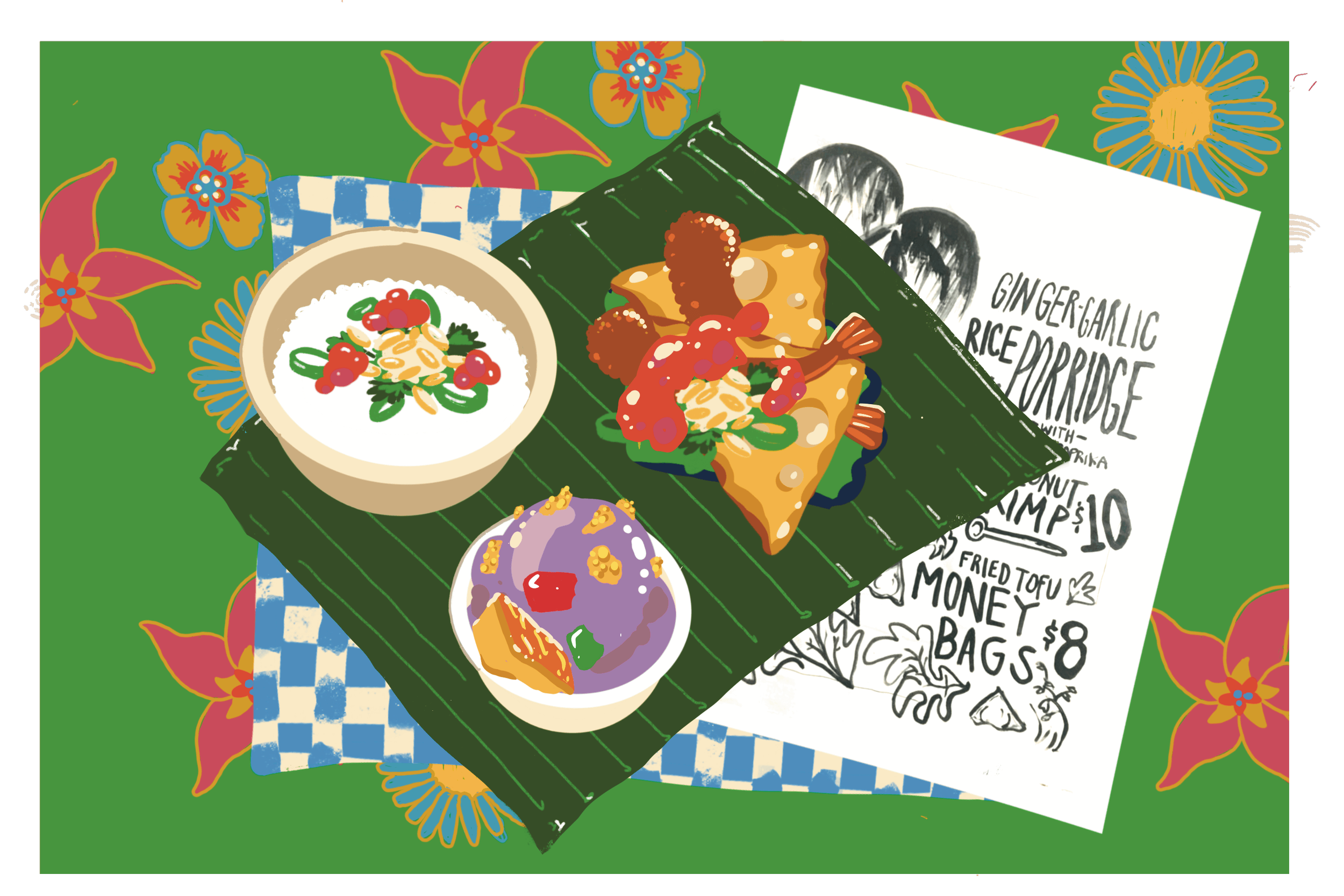
Artwork by Rami KD
Hear their story
Read the Transcript
-
Alina: I can feel the heat of the oil.
Nic: Yeah..
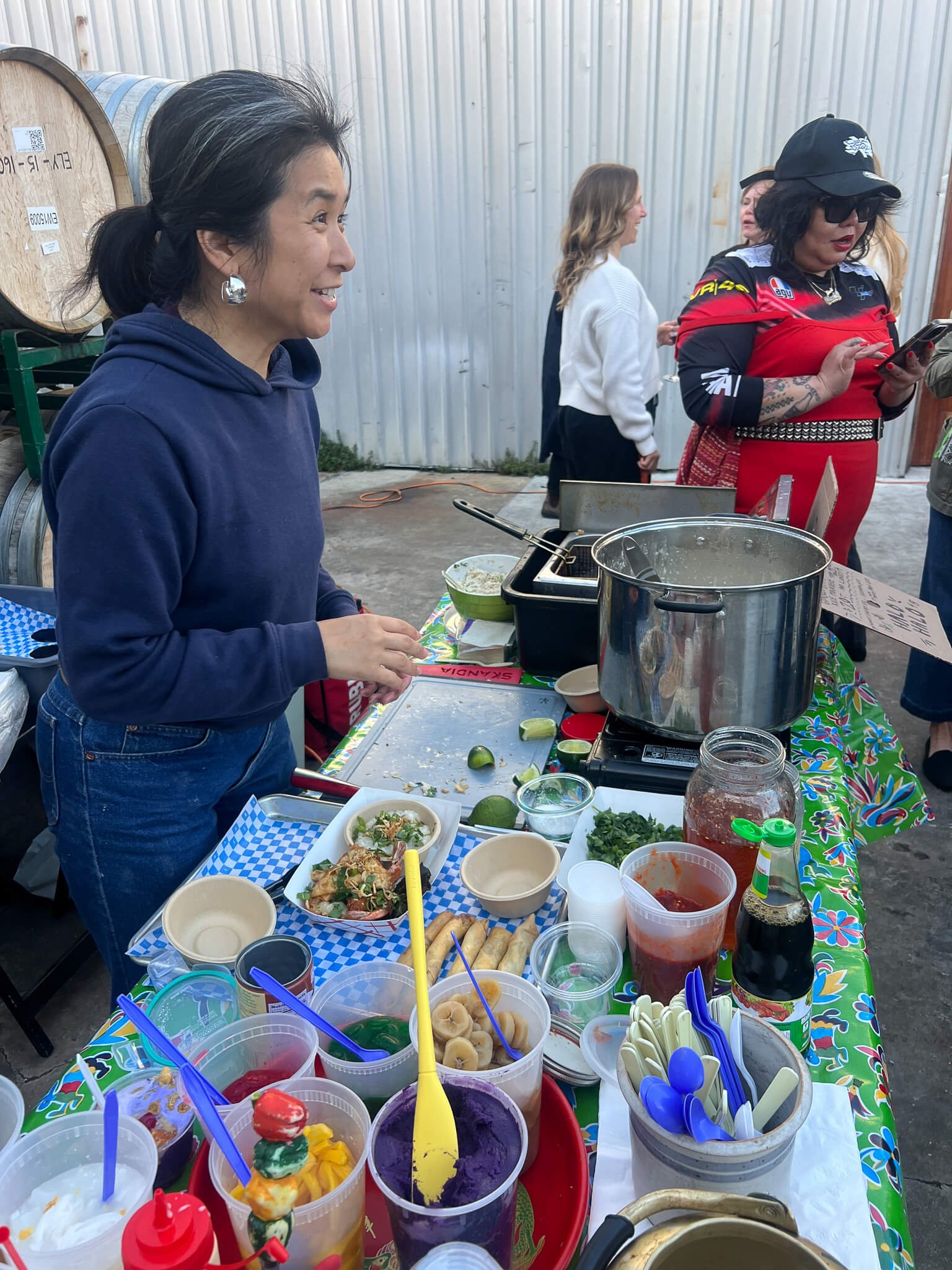
Alina: Coconut shrimp is kind of the heart and soul of SUP. Just the activity of frying shrimp, in the middle of the street.
Nic: Oh, it smells so good, Alina!
You’re walking by and you're like, what is that smell, you know? And it’s like, shrimps! It's like who doesn’t love a coconut shrimp?
Any of these a la carte comes with a bag of lettuce.
Alina: And then also, just how passionate I am about people eating it with lettuce.
Nic: Yes! They love to get scolded, our customers. I think they love an auntie vibe.
Alina: Exactly.
Nic: Because that’s how we were loved and cared for. It’s like, ‘eat this!’
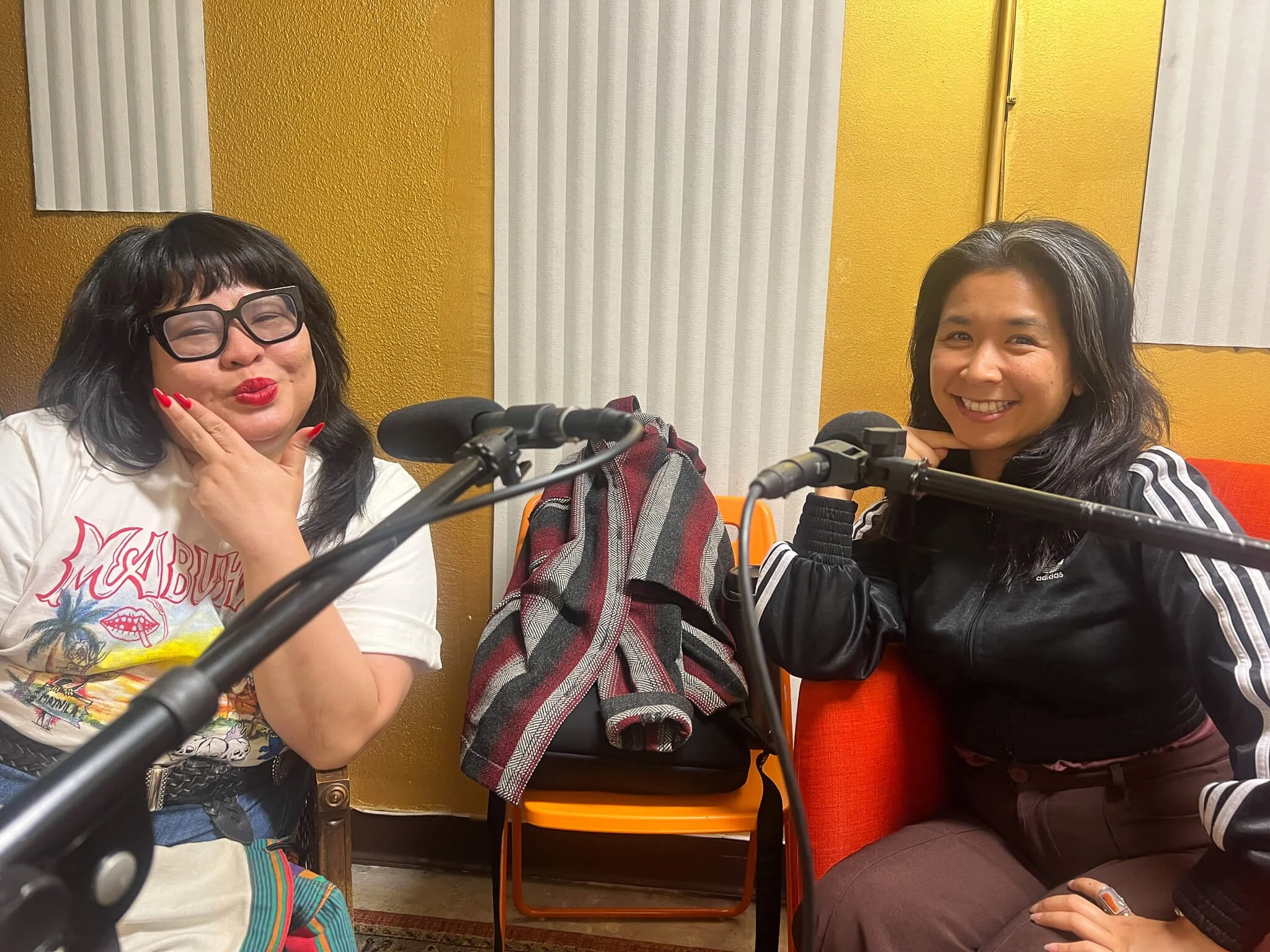
Alina: My name is Alina Vongsamart. Born to two immigrant parents from Laos. Started SUP Street Food. Picked up Nicole Marie Trinidad Feliciano along the way.
Nic: I'm Nic Feliciano. Half of SUP Street Food. I’m a zero generation immigrant from the Philippines.
We got an “around the world”. Please and thank you.
Alina: As a kid I remember just being like, loved with food. Like, after they scolded you, they're, they'd just be like, ‘hey, do you want sticky rice?’
Nic: That's the same way in Filipino culture. The greetings is like, the first thing people ask you when you walk in the door is like, ‘oh, did you eat?’ Kumain ka na
What do we have again? Shrimp?
Alina: Coconut shrimp, lumpia, and tofu moneybag.
A big piece of why I am doing this, it's like, we go back to Thailand and Laos and it's like, that's just, this is what they do. And this is what we do, and it's, take it or leave it.
Nic: Like when I'm back home and I'm eating street food in the Philippines, or when someone is just cooking outside in their garage and you grab a stool and you pull up. In that moment feeling like you belong, you're loved, someone cares for you to nourish yourself in some way.
Thank you! We’ll call your name as soon as it's ready! Alright, my loves! You’re doing one–this is for Cathy, right? Perfect.
Alina: My mom was in the refugee camp and all she wanted to do was help, like, her people, during the Vietnam War. She was a nurse and my dad was one of her patients. They fell in love. This church was like, we wanna help a family. They took him to Alaska. And that's where everyone was like, all right, we're all here. We're gonna start a restaurant. We're gonna do the things that we know how to do best. I remember being in an apartment complex occupied by my whole family. And I just remember Laotian cooking, just food everywhere. That part of the story is important to how I grew up and why cooking is important to me, and not realizing it until later.
Nic: Whenever I think of why I love food so much is because my grandma, I always remember, posted up at the table, red nails, always, feeding all the grandkids with her hands. And then I came to the States when I was ten years old. When we got here it was just my mom, my sister, and I. For us to have a shot at living here, we overstayed. My mom, luckily she befriended our neighbor from across the street. But he’s this dope dude from Thailand who came to America in the seventies. At first, marrying my mom for papers to help her out and then they ended up falling in love and he ended up being my stepdad. Foodwise, that was a huge part of how Alina and I are able to cook together, because I learned to cook through my Thai stepdad.
Alina: Like, us just talking about our childhoods, it's our way of showing our people, our love!
Nic: Showing up! Yeah. I don't know, there's like a sense of pride too, you know! Like, whole chest out. Like, this is our food.
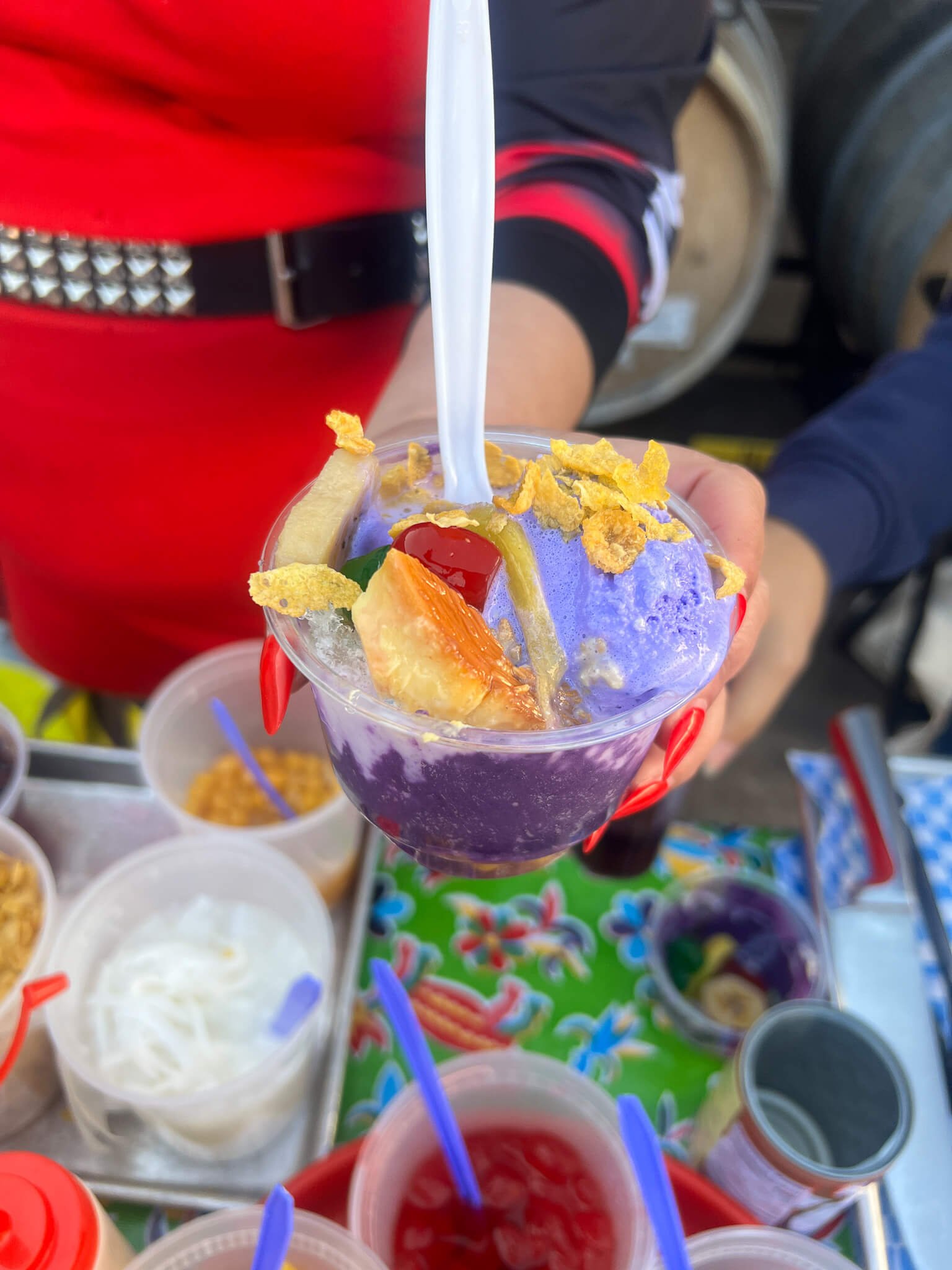
Customer: What is Halo Halo?
Nic: Halo Halo is a Filipino crushed ice dessert. One Halo Halo? Alright, you got it!
Nic: I am gonna go bring these to them and then I will take the next order.
Alina: Do you like hot sauce?
Nic: I’ll be right with you in just a second…
Alina: Voila, thank you!
Nic: This is fun Alina!
Nic: They can get really overwhelming. But, knowing that Alina is by my side, like, we got this! It’ll be okay.
Alina: I love you.
Nic: I love you! You’re killing, you’re slaying!
Alina: It’s an expression of our friendship, almost, when we’re cooking together.
Nic: And then we have Venmo, @shrimppimp right there, if you want to look for it or…
Nic: The symbolism of a shrimp is like, so us! You know, it's like, so resilient, bottom of the frickin’ ocean, like, just, what? Like, what are you going to throw at me now? We’re at the frickin’ rock bottom! You know what I mean? Like, good luck! Just a couple of shrimps in a lettuce.
Nic: We did it, Alina! We survived that crazy…
-
Alina: Puwede kong maramdaman ang init ng mantika.
Nic: Oo…
Alina: Ang coconut shrimp ay parang puso at kaluluwa ng SUP. Yung mismong gawain ng pagprito ng hipon, sa gitna ng kalsada.Nic: Ang bango nito, Alina!
Dumaan ka lang at mapapaisip ka, ano ‘yung amoy na ‘yon, alam mo? At parang, hipon! Sino ba ang hindi mahilig sa coconut shrimp?
Anuman sa mga ito na a la carte ay may kasamang isang bag ng lettuce.Alina: At saka, kung gaano ako ka-passionate na kainin ito ng mga tao kasama ang lettuce.
Nic: Oo! Gusto ng mga customer namin na napapagalitan sila. Sa tingin ko gusto nila ‘yung auntie vibe.
Alina: Tama.
Nic: Kasi ganoon kami minahal at inalagaan. Parang, ‘kainin mo ‘to!’
Alina: Ang pangalan ko ay Alina Vongsamart. Ipinanganak sa dalawang magulang na imigrante mula sa Laos. Sinimulan ang SUP Street Food. Nakasama si Nicole Marie Trinidad Feliciano sa daan.
Nic: Ako si Nic Feliciano. Kalahati ng SUP Street Food. Isa akong zero generation immigrant mula sa Pilipinas.
May “around the world” kami. Pakiusap at salamat.Alina: Noong bata ako, naaalala ko na minamahal kami sa pamamagitan ng pagkain. Parang, pagkatapos ka nilang pagalitan, sasabihin nila, ‘gusto mo ng sticky rice?’
Nic: Ganoon din sa kulturang Pilipino. Ang pagbati ay parang unang tanong kapag pumasok ka sa pinto ay, ‘kumain ka na?’ Kumain ka na?
Ano ulit ang meron tayo? Hipon?Alina: Coconut shrimp, lumpia, at tofu moneybag.
Malaking bahagi kung bakit ko ito ginagawa ay dahil bumabalik kami sa Thailand at Laos at parang, iyon talaga ang ginagawa nila. At ito ang ginagawa namin, tanggapin mo o hindi.Nic: Parang kapag nasa Pilipinas ako at kumakain ng street food, o kapag may nagluluto lang sa labas ng garahe nila at kukuha ka ng bangkito at uupo ka. Sa sandaling iyon, mararamdaman mong kabilang ka, mahal ka, may nagmamalasakit sa’yo para pakainin ka sa kahit anong paraan.
Salamat! Tatawagin namin ang pangalan ninyo kapag handa na! Sige, mga mahal ko! Isa lang kayo—para ito kay Cathy, tama? Perfect.
Alina: Ang nanay ko ay nasa refugee camp at ang gusto lang niyang gawin ay tumulong sa kanyang mga kababayan noong Vietnam War. Nurse siya at ang tatay ko ay isa sa kanyang mga pasyente. Nagkainlaban sila. May isang simbahan na nagsabing gusto nilang tumulong sa isang pamilya. Dinala siya sa Alaska. At doon parang lahat ay nagsabi, sige, nandito na tayo. Magbubukas tayo ng restaurant. Gagawin natin ang mga bagay na pinakaalam nating gawin. Naaalala ko na nakatira kami sa isang apartment complex na puno ng buong pamilya ko. At naaalala ko lang ang lutong Laotian, pagkain sa lahat ng dako. Mahalaga ang bahaging iyon ng kuwento sa kung paano ako lumaki at kung bakit mahalaga sa akin ang pagluluto, kahit hindi ko agad napagtanto noon.
Nic: Kapag iniisip ko kung bakit mahal ko ang pagkain, dahil sa lola ko. Lagi ko siyang naaalala, nakaupo sa mesa, pulang kuko, palagi, pinapakain ang lahat ng apo gamit ang kanyang mga kamay. At dumating ako sa Estados Unidos noong sampung taong gulang ako. Nang makarating kami dito, ako, ang nanay ko, at kapatid ko lang. Para magkaroon kami ng pagkakataong manirahan dito, nag-overstay kami. Buti na lang, nakipagkaibigan ang nanay ko sa kapitbahay namin sa kabila ng kalsada. Astig siyang tao mula Thailand na dumating sa Amerika noong dekada ’70. Noong una, pinakasalan niya ang nanay ko para sa papeles para matulungan siya, at kalaunan nagkainlaban sila at naging stepdad ko siya. Sa pagkain, malaking bahagi iyon kung paano kami ni Alina nakakapagluto nang magkasama, dahil natuto akong magluto mula sa Thai kong stepdad.
Alina: Parang, ang pag-uusap namin tungkol sa aming kabataan, iyon ang paraan namin ng pagpapakita ng pagmamahal sa aming mga tao!
Nic: Pagpapakita ng presensya! Oo. Ewan ko, may pakiramdam din ng pagmamalaki, alam mo? Parang buong dibdib—ito ang pagkain namin.
Customer: Ano ang Halo Halo?
Nic: Ang Halo Halo ay isang Pilipinong dessert na dinurog na yelo. Isang Halo Halo? Sige, ayos!
Nic: Ihahatid ko muna ito sa kanila at kukunin ko ang susunod na order.
Alina: Gusto mo ba ng hot sauce?
Nic: Sandali lang at babalikan kita…
Alina: Voila, salamat!
Nic: Masaya ito, Alina!
Nic: Minsan sobrang nakaka-overwhelm. Pero dahil nandiyan si Alina sa tabi ko, kaya natin ‘to! Magiging okay din.
Alina: Mahal kita.
Nic: Mahal kita! Ang galing mo, ang lupit mo!
Alina: Isa itong ekspresyon ng pagkakaibigan namin kapag magkasama kaming nagluluto.
Nic: At mayroon kaming Venmo, @shrimppimp diyan, kung gusto ninyo itong hanapin o…
Nic: Ang simbolismo ng hipon ay parang kami talaga! Alam mo, sobrang resilient, nasa pinakailalim ng dagat, parang, ano? Ano pa ang ihahagis mo sa akin ngayon? Nasa pinakailalim na kami! Alam mo ‘yon? Good luck! Ilang hipon lang sa lettuce.
Nic: Nagawa natin, Alina! Nalagpasan natin ‘yung nakakalokang…
-
Alina: Puedo sentir el calor del aceite.
Nic: Sí…
Alina: El camarón con coco es como el corazón y el alma de SUP. Solo la actividad de freír camarones, en medio de la calle.
Nic: ¡Ay, huele tan bien, Alina!
Vas caminando y dices, ¿qué es ese olor, sabes? Y es como, ¡camarones! O sea, ¿a quién no le gusta un camarón con coco?
Cualquiera de estos a la carta viene con una bolsa de lechuga.Alina: Y también, simplemente lo apasionada que soy de que la gente lo coma con lechuga.
Nic: ¡Sí! A nuestros clientes les encanta que los regañen. Creo que les gusta esa vibra de tía.
Alina: Exactamente.
Nic: Porque así fue como nos amaron y cuidaron. Es como: “¡cómete esto!”Alina: Mi nombre es Alina Vongsamart. Nací de dos padres inmigrantes de Laos. Empecé SUP Street Food. Y en el camino encontré a Nicole Marie Trinidad Feliciano.
Nic: Soy Nic Feliciano. La mitad de SUP Street Food. Soy inmigrante de generación cero de Filipinas.Tenemos un “around the world”. Por favor y gracias.
Alina: De niña recuerdo sentirme amada a través de la comida. Como que, después de regañarte, simplemente te decían: “oye, ¿quieres arroz pegajoso?”
Nic: Es igual en la cultura filipina. El saludo es como, lo primero que te preguntan cuando entras por la puerta es: “oh, ¿ya comiste?” Kumain ka na¿Qué tenemos otra vez? ¿Camarón?
Alina: Camarón con coco, lumpia y tofu moneybag.Gran parte de por qué hago esto es que regresamos a Tailandia y Laos y es como, esto es lo que hacen. Y esto es lo que hacemos, y es: tómalo o déjalo.
Nic: Como cuando estoy en casa comiendo comida callejera en Filipinas, o cuando alguien está cocinando afuera en su garaje y agarras un banquito y te sientas. En ese momento sientes que perteneces, que eres querido, que alguien se preocupa por nutrirte de alguna manera.¡Gracias! ¡Llamaremos tu nombre en cuanto esté listo! ¡Muy bien, mis amores! Estás haciendo uno—este es para Cathy, ¿verdad? Perfecto.
Alina: Mi mamá estaba en un campo de refugiados y todo lo que quería era ayudar a su gente durante la guerra de Vietnam. Era enfermera y mi papá era uno de sus pacientes. Se enamoraron. Esta iglesia dijo: queremos ayudar a una familia. Lo llevaron a Alaska. Y ahí fue cuando todos dijeron: está bien, estamos todos aquí. Vamos a empezar un restaurante. Vamos a hacer lo que sabemos hacer mejor. Recuerdo estar en un complejo de apartamentos ocupado por toda mi familia. Y recuerdo la cocina laosiana, comida por todas partes. Esa parte de la historia es importante para cómo crecí y por qué cocinar es importante para mí, aunque no lo entendí hasta después.
Nic: Cuando pienso en por qué amo tanto la comida es por mi abuela. Siempre la recuerdo sentada en la mesa, uñas rojas, siempre, alimentando a todos los nietos con sus manos. Y luego llegué a Estados Unidos cuando tenía diez años. Cuando llegamos, éramos solo mi mamá, mi hermana y yo. Para poder tener una oportunidad de vivir aquí, nos quedamos más tiempo del permitido. Mi mamá, por suerte, se hizo amiga de nuestro vecino de enfrente. Pero es este tipo increíble de Tailandia que llegó a Estados Unidos en los años setenta. Al principio se casó con mi mamá por los papeles para ayudarla, y luego terminaron enamorándose y se convirtió en mi padrastro. En términos de comida, eso fue una gran parte de cómo Alina y yo podemos cocinar juntas, porque aprendí a cocinar con mi padrastro tailandés.
Alina: Como que, hablar de nuestras infancias es nuestra forma de mostrarle a nuestra gente nuestro amor.
Nic: ¡Hacernos presentes! Sí. No sé, también hay un sentido de orgullo, ¿sabes? Como con el pecho en alto. Como: esta es nuestra comida.Cliente: ¿Qué es Halo Halo?
Nic: Halo Halo es un postre filipino de hielo triturado. ¿Un Halo Halo? ¡Muy bien, ya lo tienes!Nic: Voy a llevarles esto y luego tomo el siguiente pedido.
Alina: ¿Te gusta la salsa picante?
Nic: Estaré contigo en un segundo…
Alina: Voilà, ¡gracias!Nic: ¡Esto es divertido, Alina!
Nic: Puede volverse muy abrumador. Pero saber que Alina está a mi lado es como, ¡podemos con esto! Va a estar bien.Alina: Te amo.
Nic: ¡Te amo! ¡La estás rompiendo, lo estás dando todo!Alina: Es casi una expresión de nuestra amistad cuando cocinamos juntas.
Nic: Y también tenemos Venmo, @shrimppimp, ahí mismo, por si quieres buscarlo o…Nic: El simbolismo del camarón es como, ¡tan nosotras! ¿Sabes? Es como, tan resiliente, en el fondo del maldito océano, como, ¿qué más me vas a lanzar ahora? ¡Estamos en el fondo total! ¿Sabes a lo que me refiero? ¡Buena suerte! Solo un par de camarones en una lechuga.
Nic: ¡Lo logramos, Alina! Sobrevivimos a esa locura…