Nigel
Serving: Jerk Chicken
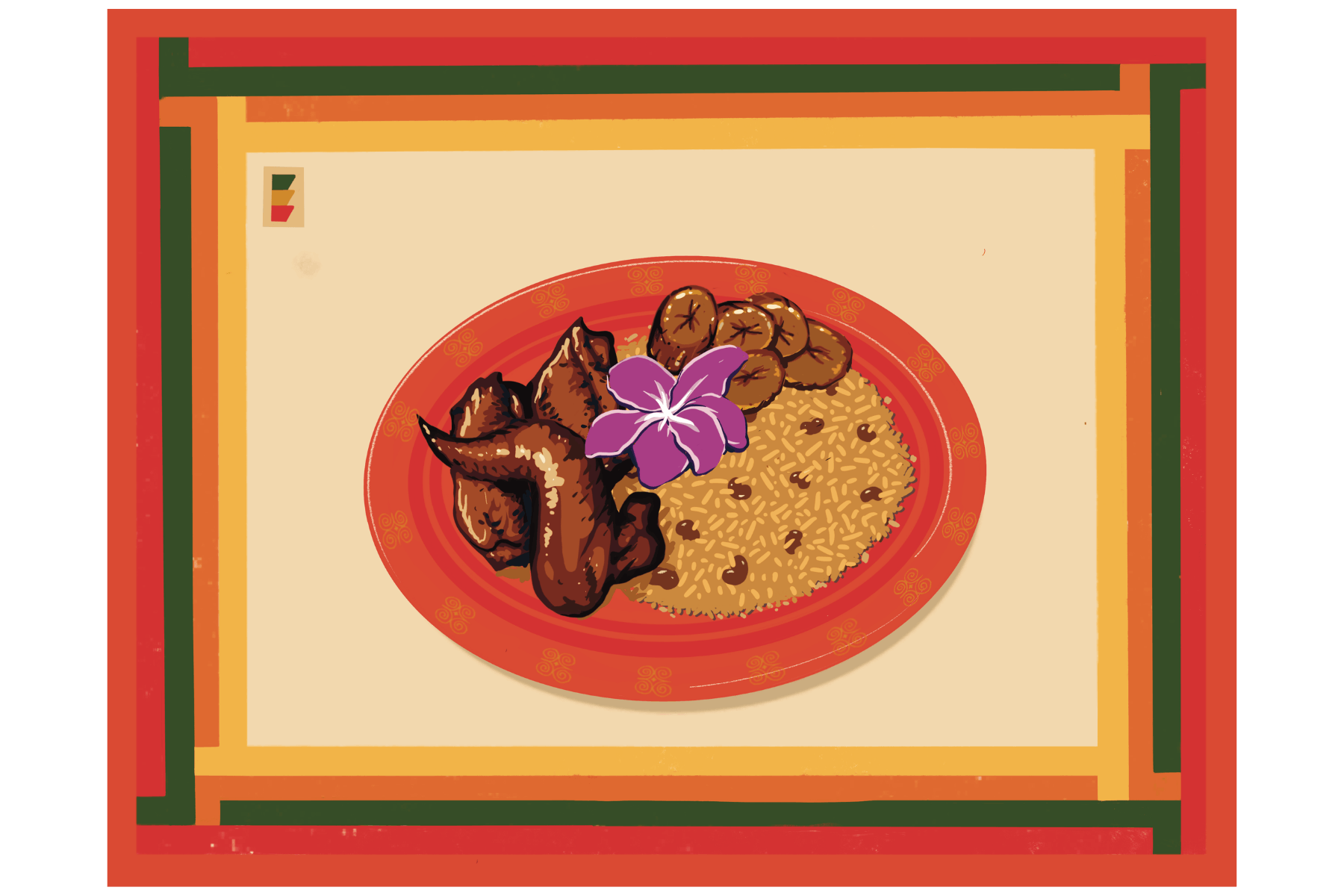
Artwork by Rami KD
Hear their story
Read the Transcript
-
Nigel: My name is Nigel Jones. I was born in Kingston, Jamaica. Came to this country when I was 16 years old, in the ‘70s. About 2013 I decided I wanted to get into the culinary industry, mainly because I didn't see any full representation of my own culture here in the Bay Area.
My primary role model for cook was my grandmother. Gwendolyn. And I would call her Gwenie. We would go to the market every Saturday. They go to these huge open air markets where you have yams and big piles of things where the farmers would come in. So it's real farmer's market.
One of the things that, um, she did with me is encourage me to feel comfortable in the kitchen. And that's how I learned how to cook. 'cause I remember one time I complained about some of the things that she was preparing, like liver and she's like, well, if you're gonna complain about my cooking, you better learn how to cook yourself. She'd be very excited to know that I'm, I'm in the restaurant industry and operating in my own restaurant.
My mother left Jamaica probably when I was like two or younger and went to the United States to try to make a life for herself. My father left Jamaica before I was born and went to England. My mother got her documentations, properly. Married somebody here. Married somebody here and was able to file my immigration paper and get me up here on a permanent resident visa. My grandmother was the only mother I knew and I was leaving them to go live with my mother for the first time.
But I was excited to leave the island and to be in America. America was a place that at the time a lot of people wanted to visit and be a part of this culture. And I was the same when I first arrived as an immigrant, I mean, I didn't really think about this whole conversation with immigration. Didn’t have this sense of fear about being different. But the whole concept of being Black was different because that was never an issue for me growing up in Jamaica. And then my language, the way I spoke English was different than everybody here. Interacting with other kids, as soon as they open my mouth, they know I'm not from around the block, you know?
Like a lot of immigrants, when you come to a country like this and there's so much culture and there's so much of everything, you want to try everything and so I was less interested in my own cultural foods as all the stuff I can get here. When I came here to the Bay Area, for me, it was like lack of representation of anybody that look and behave like me. People love reggae music here, Bob Marley and things like that, but in terms of real community around Jamaican foods, it was non-existence.
Jamaica is an island, we call the land of wood and water. And also the motto of the country is out of many, we are one. When you walk around Jamaica, you know the things that impact you immediately are the smells of the different flavors and the food and the people. Jerk chicken is another dish that we eat a lot down there. And you can get that on the street anywhere you walk around Jamaica, people are selling jerk chicken on the street. It's also important for Jamaica as a culture in terms of our history. The word jerk chicken, it goes back to the indigenous people in Jamaica, the Arawak. Those people were nomads, they were living before refrigeration time. They would cook their meats under the ground and they smoke it. The Africans that were escaped slaves who were rebelling, fighting against the British for independence, they were in the mountains with those Indians and they would watch the way these people were cooking, under the ground. There was no smoke. The indigenous people were critical in terms of jerk chicken.
This whole conversation about immigrants and immigration, how it plays out here in this United States, which is a very complex conversation because some people, especially Black people, didn't migrate here intentionally. We were brought here. The energy around who belongs in this country versus who doesn't is very complex, but I hope that we don't continue to be in this zero sum mentality that if one person achieves something is at the expense of somebody else which is not true and is not healthy for our country. That's why we can never really embrace the goodness that immigration brings in this country.
When I think about community, that's the biggest thing that comes to me is how do you share food together? And I wanted to create that feel in any restaurant situation that I have that community aspect of being together and sharing food together.
-
Nigel: Mi nombre es Nigel Jones. Nací en Kingston, Jamaica. Vine a este país cuando tenía 16 años, en los años 70. Alrededor de 2013 decidí que quería entrar en la industria culinaria, principalmente porque no veía una representación completa de mi propia cultura aquí en el Área de la Bahía.
Mi principal modelo a seguir como cocinero fue mi abuela, Gwendolyn. Y yo le decía Gwenie. Íbamos al mercado todos los sábados. Íbamos a estos enormes mercados al aire libre donde había ñames y grandes montones de productos que traían los agricultores. Así que era un verdadero mercado de agricultores.
Una de las cosas que ella hizo conmigo fue animarme a sentirme cómodo en la cocina. Y así fue como aprendí a cocinar. Porque recuerdo una vez que me quejé de algunas de las cosas que ella preparaba, como el hígado, y ella me dijo: “bueno, si vas a quejarte de mi cocina, mejor aprende a cocinar tú mismo”. A ella le emocionaría mucho saber que estoy en la industria de los restaurantes y que tengo mi propio restaurante.Mi madre dejó Jamaica cuando yo tenía como dos años o menos y se fue a los Estados Unidos para tratar de construir una vida. Mi padre dejó Jamaica antes de que yo naciera y se fue a Inglaterra. Mi madre obtuvo sus documentos correctamente. Se casó aquí. Se casó aquí y pudo tramitar mis papeles de inmigración y traerme con una visa de residencia permanente. Mi abuela fue la única madre que conocí, y yo la estaba dejando para ir a vivir con mi madre por primera vez.
Pero yo estaba emocionado de salir de la isla y estar en Estados Unidos. Estados Unidos era un lugar que, en ese momento, muchas personas querían visitar y del que querían formar parte. Y yo era igual cuando llegué por primera vez como inmigrante. No pensaba realmente en toda esta conversación sobre inmigración. No tenía ese sentimiento de miedo por ser diferente. Pero todo el concepto de ser negro era diferente, porque eso nunca fue un problema para mí al crecer en Jamaica. Y luego mi idioma, la forma en que hablaba inglés, era diferente a la de todos aquí. Al interactuar con otros niños, en cuanto abría la boca, sabían que no era de aquí, ¿sabes?
Como muchos inmigrantes, cuando llegas a un país como este, donde hay tanta cultura y tanta variedad de todo, quieres probarlo todo, y por eso me interesaba menos la comida de mi propia cultura que todo lo que podía encontrar aquí. Cuando llegué al Área de la Bahía, para mí era como una falta de representación de personas que se vieran y se comportaran como yo. A la gente le encanta la música reggae aquí, Bob Marley y cosas así, pero en términos de una comunidad real en torno a la comida jamaicana, no existía.Jamaica es una isla; la llamamos la tierra de la madera y el agua. Y también el lema del país es: “de muchos, somos uno”. Cuando caminas por Jamaica, las cosas que te impactan de inmediato son los olores de los distintos sabores, la comida y la gente. El pollo jerk es otro plato que comemos mucho allá. Y puedes encontrarlo en la calle en cualquier parte de Jamaica; la gente lo vende en la calle. También es importante para la cultura jamaicana en términos de nuestra historia. La palabra “jerk” se remonta a los pueblos indígenas de Jamaica, los arawak. Estas personas eran nómadas, vivían antes de la refrigeración. Cocinaban sus carnes bajo tierra y las ahumaban. Los africanos que escapaban de la esclavitud, que se rebelaban y luchaban contra los británicos por la independencia, estaban en las montañas con esos indígenas y observaban cómo cocinaban bajo tierra. No había humo. Los pueblos indígenas fueron fundamentales en el desarrollo del pollo jerk.
Toda esta conversación sobre los inmigrantes y la inmigración, y cómo se desarrolla aquí en los Estados Unidos, es muy compleja, porque algunas personas, especialmente las personas negras, no migraron aquí intencionalmente. Fuimos traídas. La energía en torno a quién pertenece a este país y quién no es muy compleja, pero espero que no sigamos en esta mentalidad de suma cero de que si una persona logra algo es a costa de otra, lo cual no es cierto y no es saludable para nuestro país. Por eso nunca logramos abrazar plenamente lo bueno que la inmigración aporta a este país.
Cuando pienso en comunidad, lo más importante que me viene a la mente es cómo compartir la comida. Y quería crear esa sensación en cualquier restaurante que tengo: ese aspecto comunitario de estar juntos y compartir la comida.