
Marlene
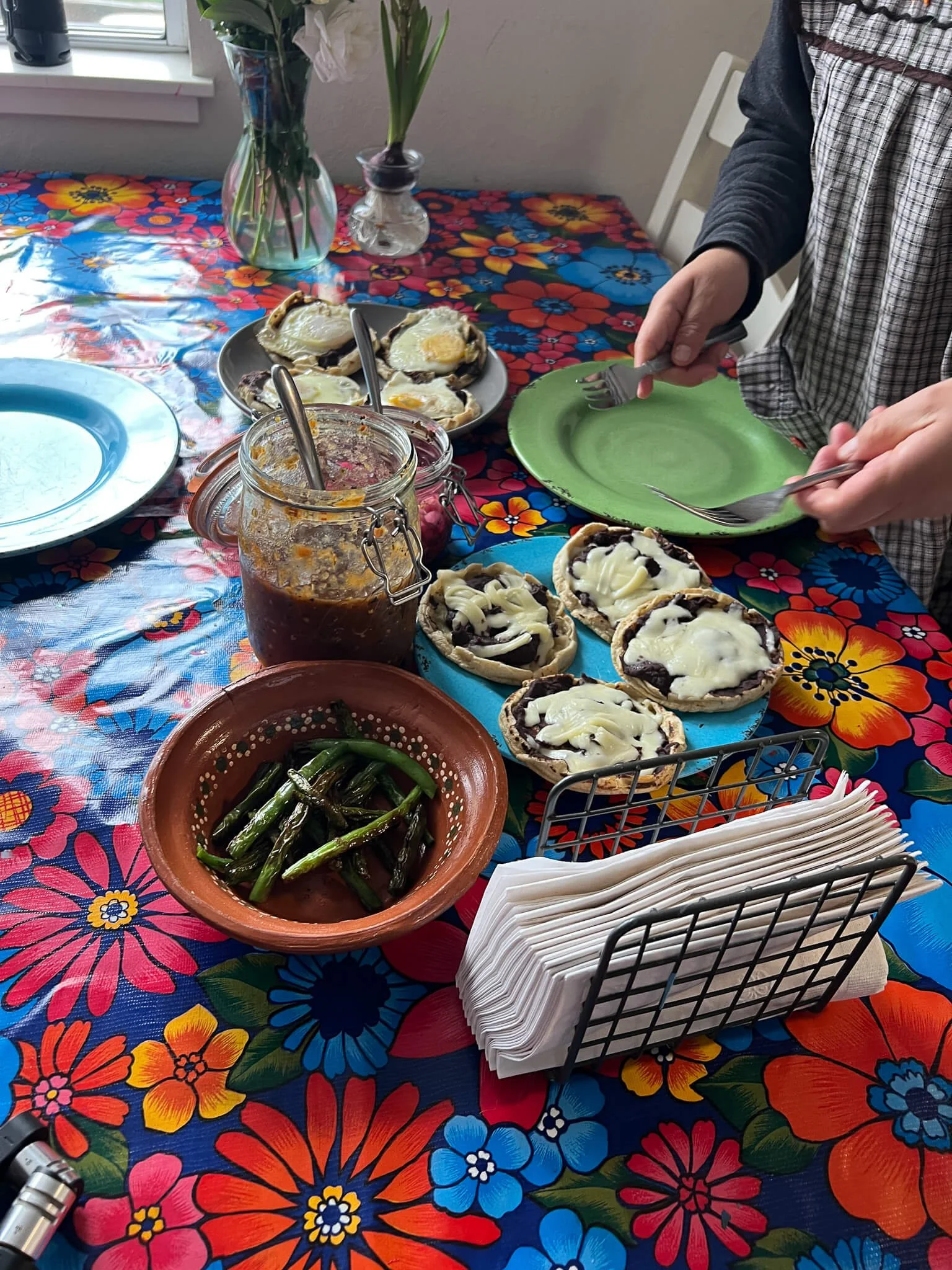
Serving: Sopes with Black Beans,Green Beans & Salsa
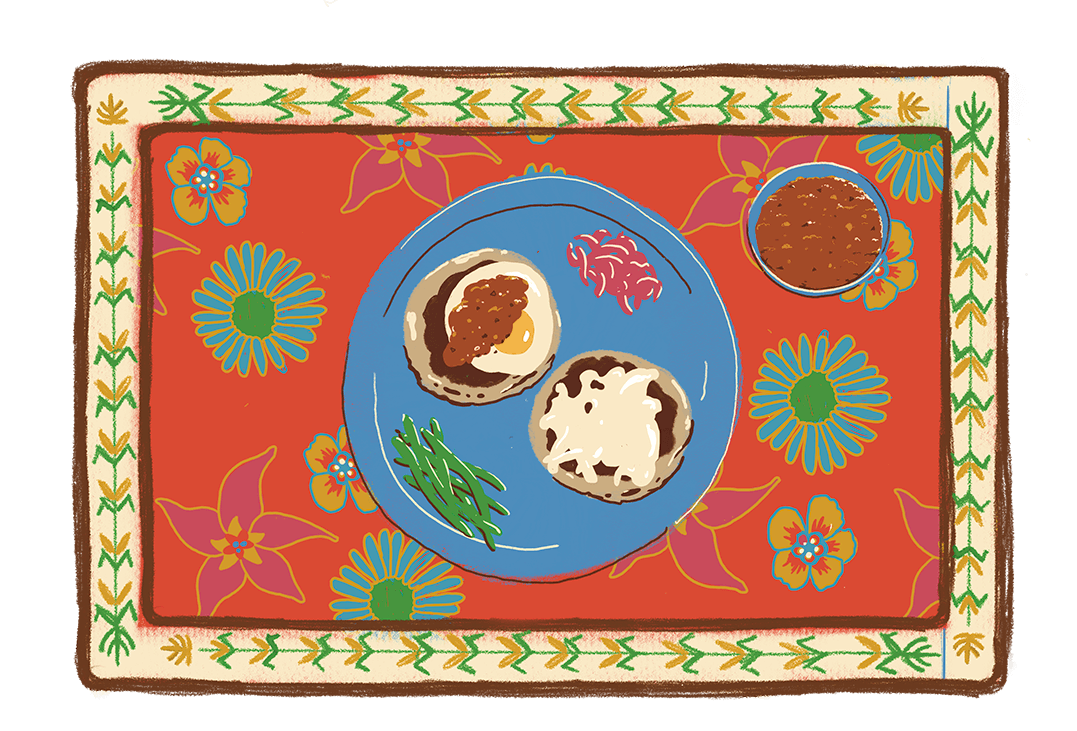
Artwork by Rami KD
Hear their story
Read the Transcript
-
So you're gonna enjoy a very humble but traditional dish that my grandma used to make when I was little.
My name is Marlene. Today I’m making sopes with beans and over easy eggs and some green beans. With salsa!
So we have the masa, which is instant corn flour.
Corn has a lot to do with my upbringing and my family, my memories, and who I am. My favorite memories are when my grandma would make tortillas in her little kitchen.
Just put a little bit of water and you'll have the masa ready.
So I'm from a small town in Michoacán. The town is Tarimbaro. When I was a little girl my grandma, everyday she will wake up like at five in the morning. By the time we came back from school, she'll be making tortillas. You know whenever I make tortillas I really think about her. You know, because I came here when I was 16 years old and I didn’t get to see my grandma—I’m gonna cry—for like 20 years. Anyways.
Sometimes people make them with their hands like this, but that takes more time. So what I’m gonna do, just gonna put it in the presser.
So I came here when I was 16 years old. When I was that I age I thought, you know, we are going to go to the north and make some money. And I'm 42, so I mean I've been here like most of my younger life and my adult life. So it was, it was a hard journey.
Pinching the tortillas while they're hot so we can have, like, a nice crunchy sope.
Now I'm here in Oakland. Trying to sell food. And part of why I wanted to do this is because I worked in all kinds of fast food restaurants and I see like the labor exploitation, the not good quality food. But also as an immigrant, like, how do we create our own opportunities, how do we create our own jobs because we immigrants, we had to be super creative or we ended up working in places where we're exploited or not appreciated.
I don’t really follow specific measures. If I’m not sure, I would call my grandma, when she was alive, or my mom or my aunts. And they’ll say, just grab a handful of this and a pinch of this and a little bit of this. Like the pot, it’s going to tell you what it needs.
Whatever we cook, it has a story, and we have to think about who harvests our food, like, where is the food coming from, how are we going to take, are we taking care of the land, the people who work in the fields. We have to treat them well.
Alright, so this is the sopes. So grab a sope, they way I’m gonna do it. You wanna try all the salsa’s. It’s good right? very humble, very simple, but very tasty. Economic. This is how I grew up. People tell me that my food it’s not just tasty but it feels alive because it’s fresh. The tortillas, the salsas, I mean, it makes me feel home.
-
Vas a disfrutar un platillo muy humilde pero tradicional que mi abuela solía hacer cuando yo era niña.
Mi nombre es Marlene. Hoy estoy haciendo sopes con frijoles y huevos estrellados y unos ejotes. ¡Con salsa!
Aquí tenemos la masa, que es harina de maíz instantánea.
El maíz tiene mucho que ver con mi crianza y mi familia, mis recuerdos y quién soy. Mis recuerdos favoritos son cuando mi abuela hacía tortillas en su cocinita.
Solo pones un poquito de agua y ya tienes la masa lista.
Soy de un pueblito en Michoacán. El pueblo es Tarímbaro. Cuando era niña, mi abuela todos los días se despertaba como a las cinco de la mañana. Para cuando regresábamos de la escuela, ella ya estaba haciendo tortillas. Y cada vez que hago tortillas realmente pienso en ella. Porque yo llegué aquí cuando tenía 16 años y no pude ver a mi abuela —voy a llorar— por como 20 años. En fin.
A veces la gente las hace con las manos así, pero eso toma más tiempo. Así que lo que voy a hacer es ponerla en la prensa.
Llegué aquí cuando tenía 16 años. A esa edad pensaba, bueno, nos vamos a ir al norte a ganar dinero. Y tengo 42, así que he estado aquí la mayor parte de mi vida joven y adulta. Fue… fue un camino difícil.
estoy pellizcando las tortillas mientras están calientes para que podamos tener un sope bien crujientito.
Ahora estoy aquí en Oakland, tratando de vender comida. Y parte de la razón por la que quería hacer esto es porque trabajé en todo tipo de restaurantes de comida rápida y veo la explotación laboral, la mala calidad de la comida. Pero también, como inmigrante, ¿cómo creamos nuestras propias oportunidades?, ¿cómo creamos nuestros propios trabajos? Porque nosotros, los inmigrantes, tenemos que ser súper creativos o terminamos trabajando en lugares donde nos explotan o no nos valoran.
No sigo medidas específicas. Si no estoy segura, llamaba a mi abuela —cuando vivía— o a mi mamá o a mis tías. Y ellas me decían: agarra un puñito de esto y una pizquita de esto y un poquito de aquello. Como que la olla te va a decir lo que necesita.
Todo lo que cocinamos tiene una historia, y tenemos que pensar en quién cosecha nuestra comida, de dónde viene, cómo vamos a cuidarla; si estamos cuidando la tierra y a las personas que trabajan en el campo. Tenemos que tratarlos bien.
Bueno, estos son los sopes. Así que agarra un sope, de la manera en que yo lo voy a hacer. Quieres probar todas las salsas. Está bueno, ¿verdad? Muy humilde, muy sencillo, pero muy sabroso. Económico. Así es como crecí. La gente me dice que mi comida no solo es rica, sino que se siente viva porque es fresca. Las tortillas, las salsas… me hace sentir en casa.

Special Thanks: Tsiri @tsiripurepecha