
Wanda
Serving: Purple Collard Greens
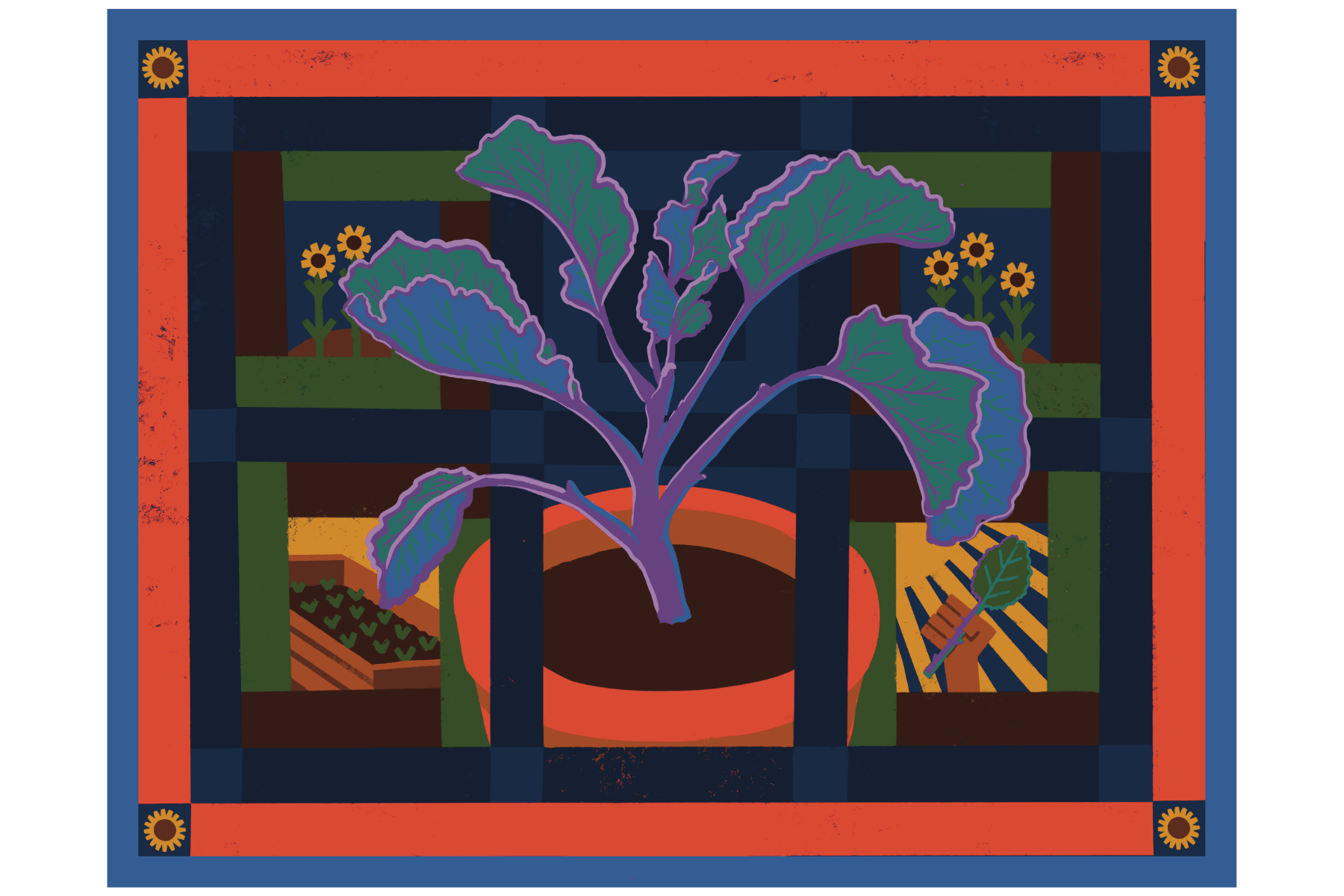
Artwork by Rami KD
Hear their story
Read the Transcript
-
Ms. Wanda: Black folks are like collard greens. And in particular, purple collard greens. Which we have grown here in Prescott.
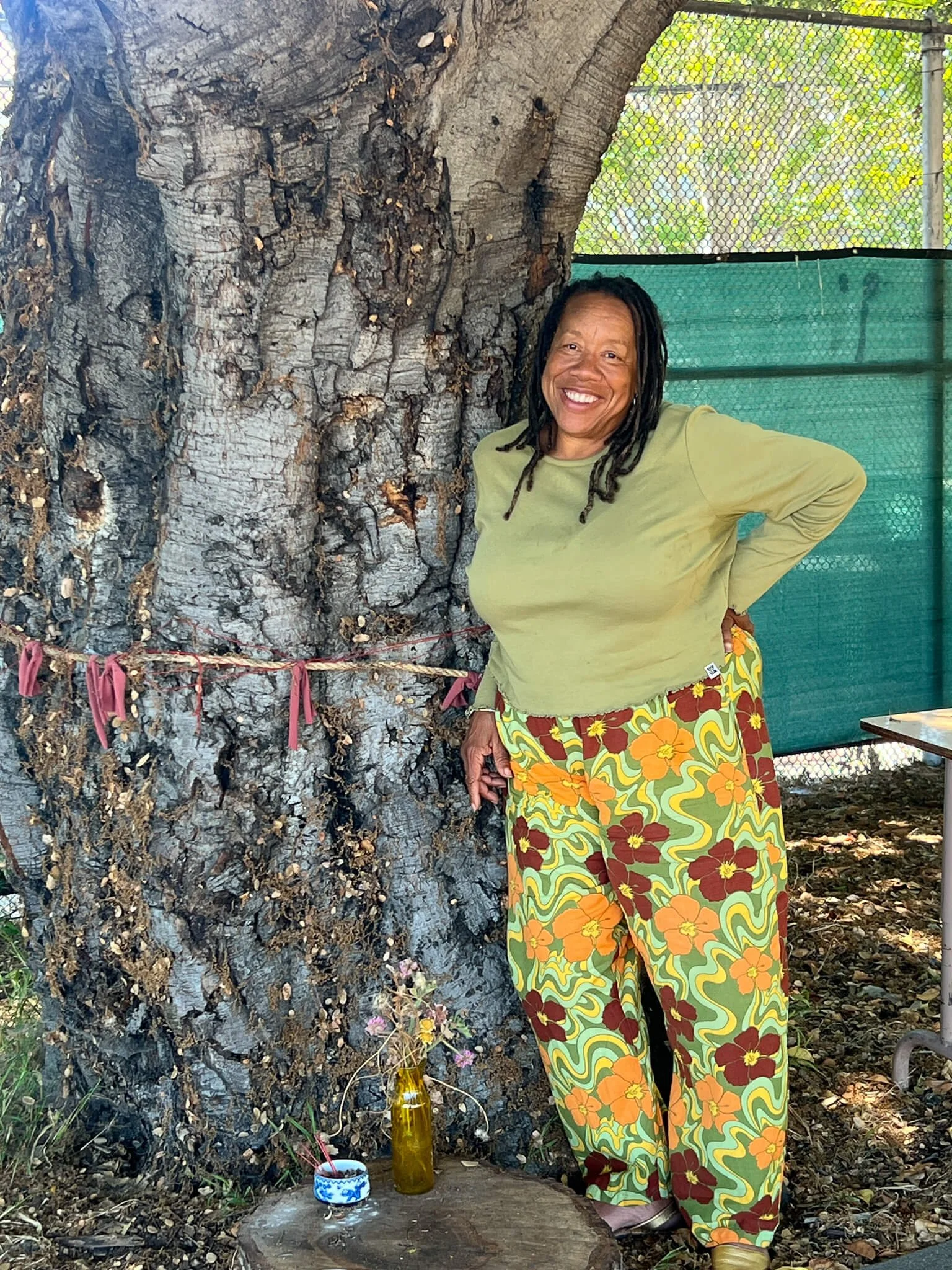
Ms. Wanda to a group of kids: Welcome. Y’all can have a sit on the ground, sit in a chair, lay on a mulch mound. Well, welcome to Prescott Elementary. My name is Wanda Stewart. The kids around here, and some people, call me Mama Wanda.
I'm a mother, I'm a teacher. I'm a gardener. I'm a Black girl with some magic, and I'm 65 years old.
What schools do you all go to? Sankofa…
You know, one of the things we say in this whole food world is you got to grow the crops that people want, culturally relevant crops, right? If Black people are there, you need to grow collard greens.
Okay. So I was born in Philadelphia in the last week of 1959. The Thanksgiving dinners that my grandmother used to have. Turkey cranberry sauce, stuffing, always collard greens if nothing else. you know, there's rules about who makes those collard greens.
And I say this to my people all the time. Y’all, let's talk about the ways we cook collard greens, because we're used to thinking that they take an hour and a half to two hours to cook. That's so not true. That tradition or that habit or that way of cooking it, we know, comes from slavery when you had to put on what was for dinner before you went out to work. The meat originally went into the collard greens, ‘cause slaves weren’t afforded meat, the meat that went into the collard greens were the scraps, right? The ham hocks. But we found a way to make all that stuff delicious. Sometimes we have habits that are just that. I think it’s just really important to take a look at those traditions and make sure that they continue to serve.
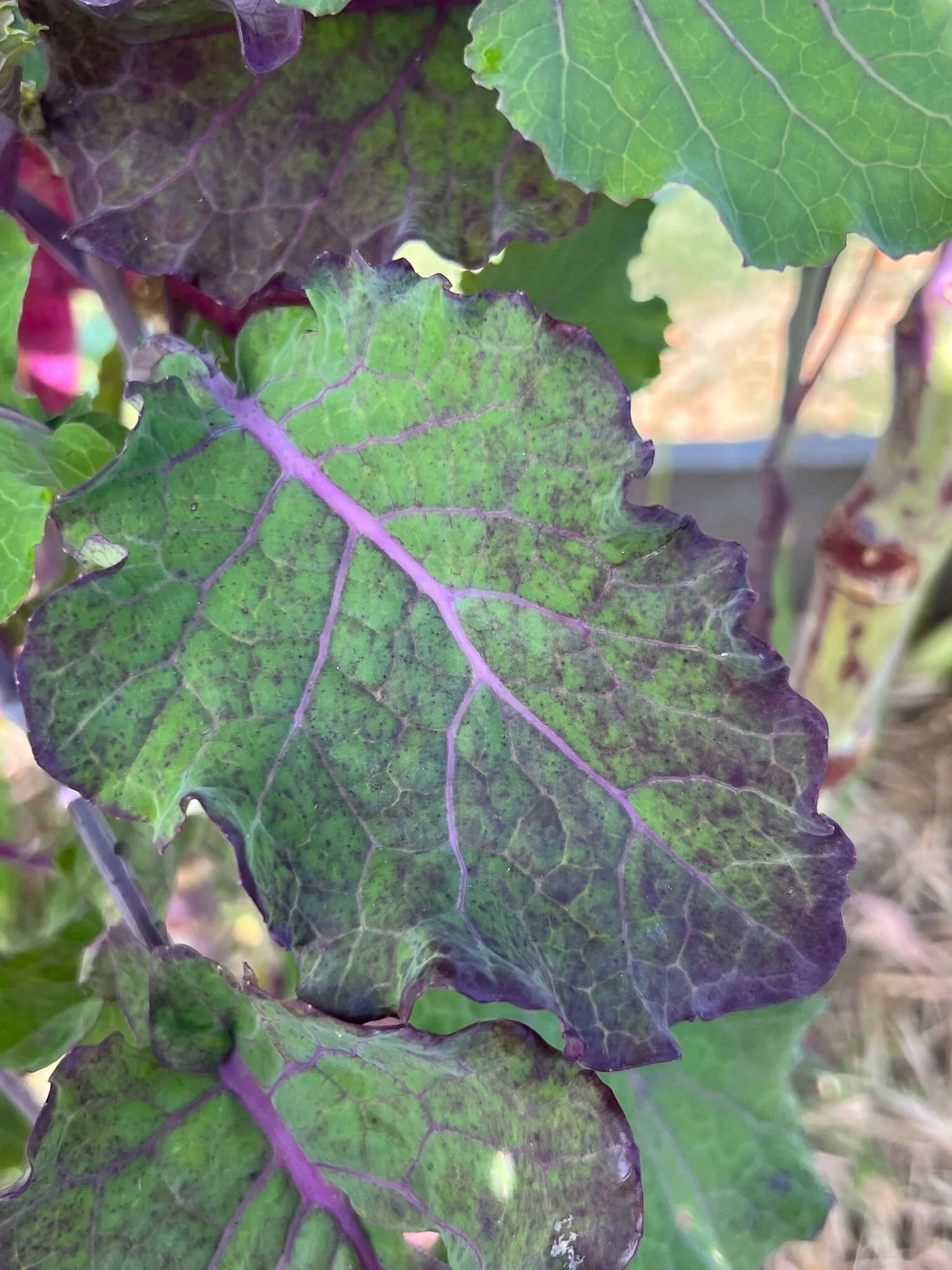
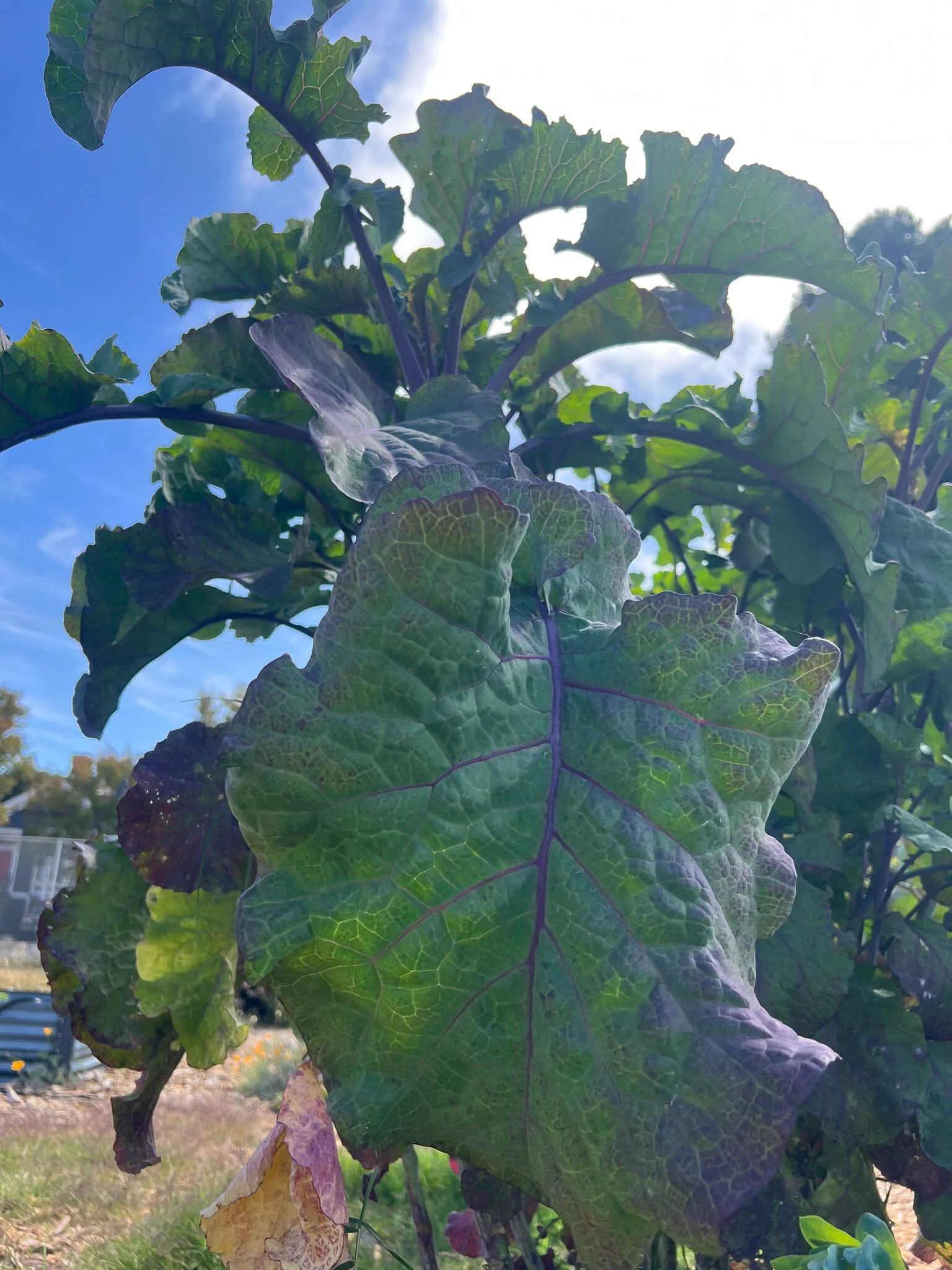
So purple collard green trees, which we have growing here at Prescott, are a perennial crop. They don’t ever go to seed. It looks like a hardy collard green, but it’s purple, purple, purple. And it looks as resilient as it is.
It's how we kept ourselves fed once we were in the Americans. And then all the other things, corn, sorghum, black eye peas and beans. You know, that's the stuff that women kept woven into their hair, right? That's why we call them cornrows. ‘Cause no matter where you land, no matter who catches you, you will be able to eat and you will be able to grow, if you have those things.
I grow my garden so that I’m not depending on anyone to feed me and my kids and my family. So let’s talk about school gardens.
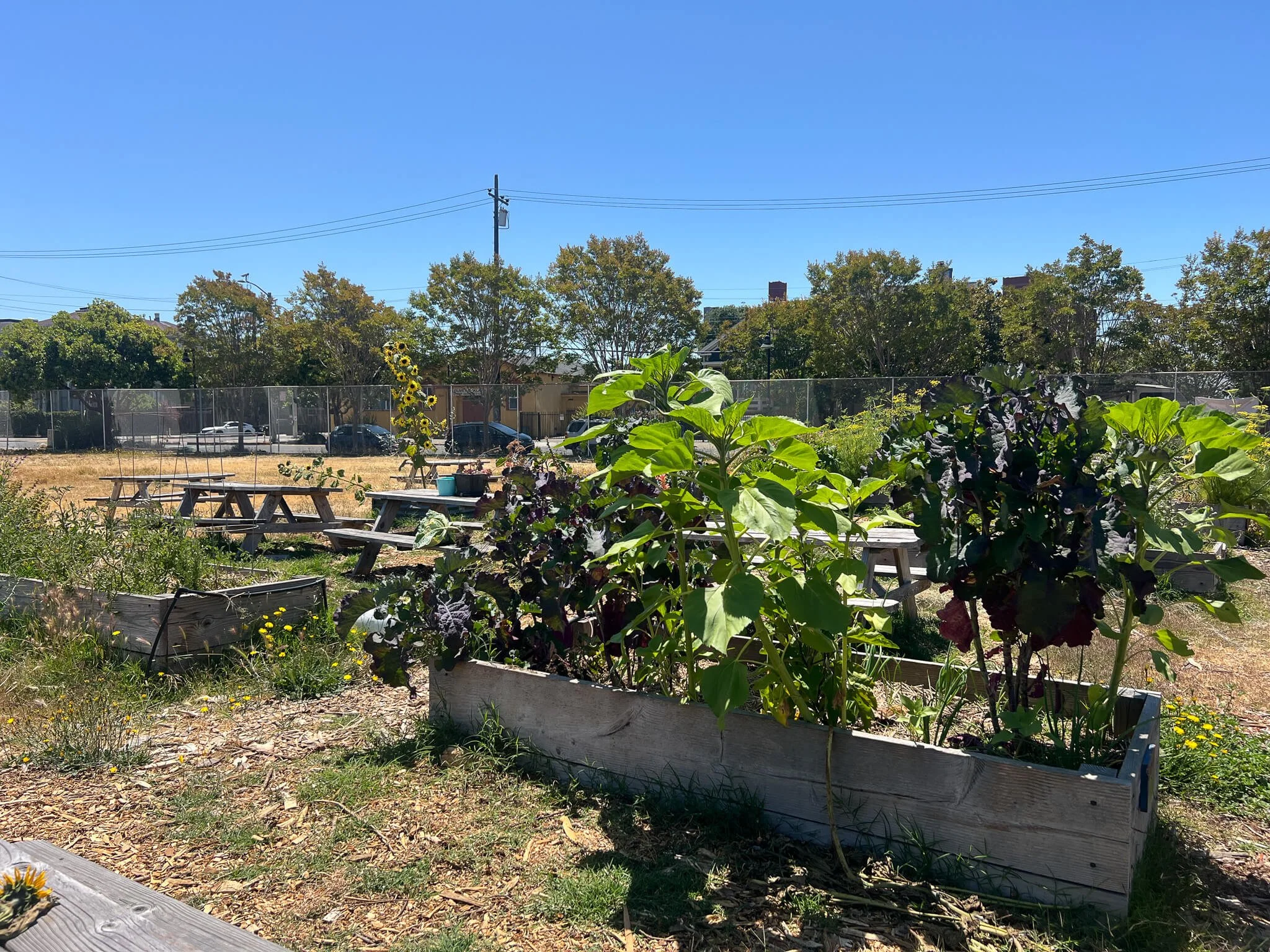
Prescott is the oldest school in Oakland Unified School district. It was the professional home to a woman named Ida Louise Jackson who was the first Black, credentialed teacher in the state of California. So the roots of the place run as deeply as the roots of this tree right here.
When you feed people, they interpret that and experience that as love and caring. So we feed people, we bring them in, we learn to love each other, and blame it on a garden.
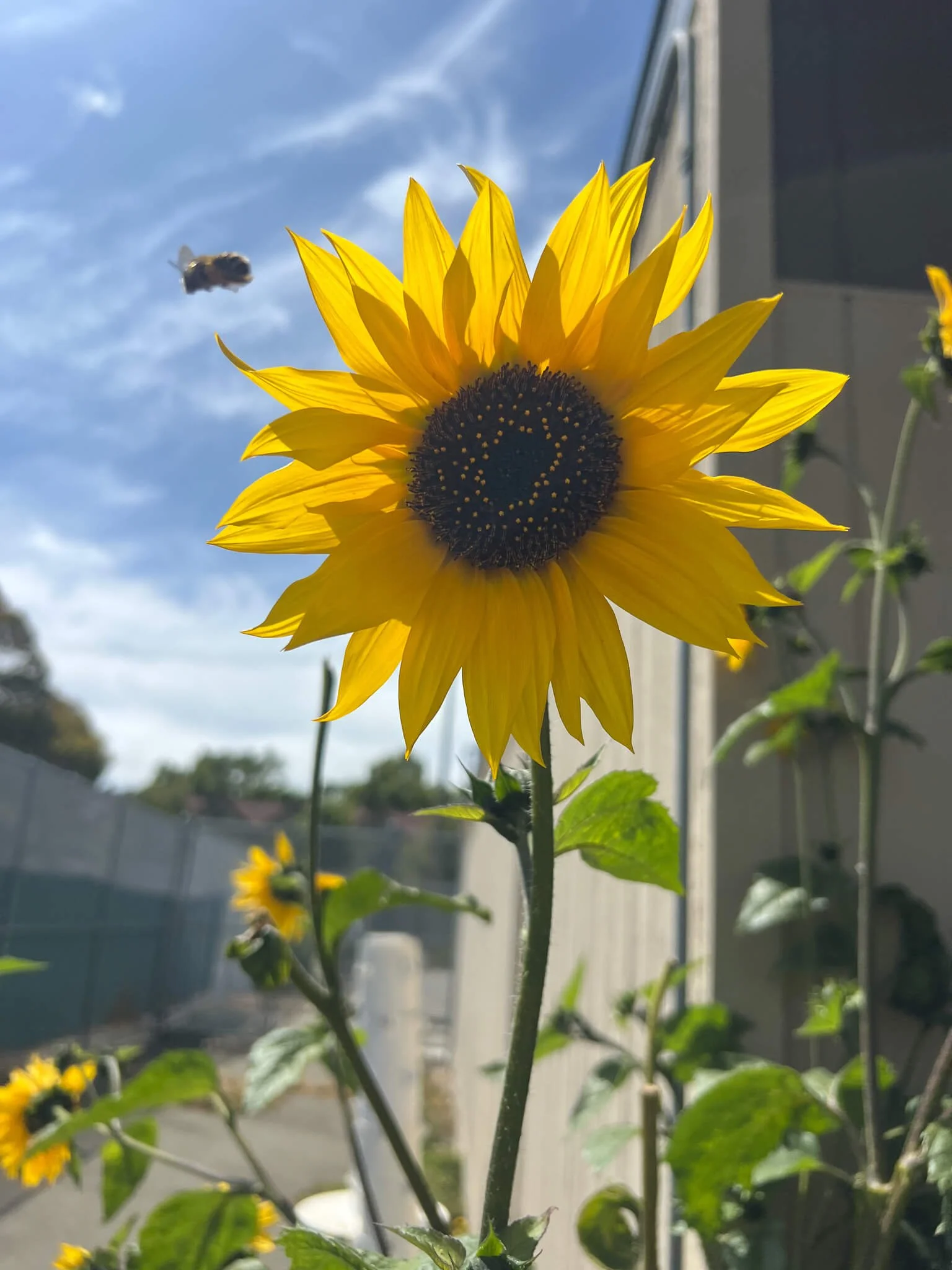
Go far and fly, go see what we got. Pollinate, pollinate.
To propagate purple collard greens, you cut off the top of them. You cut off their heads. You strip down all of the leaves until you got just a little bud, and then you just go and plunk it back down in the soil and it will start growing for you. And, the one that you cut, will also continue to grow. For me, that's the story of my people here in Americas, right? Collard greens illustrate my people’s ability to make a way out of no way.
For real, you just snap off the tip. You want some? You got a garden? So we go get you a couple to get started. It’s amazing. They’re amazing.
-
Sra. Wanda: La gente negra es como las berzas. Y en particular, las berzas moradas. Que hemos cultivado aquí en Prescott.
Sra. Wanda a un grupo de niños: Bienvenidos. Pueden sentarse en el suelo, sentarse en una silla, acostarse sobre un montón de mantillo. Bueno, bienvenidos a la Primaria Prescott. Mi nombre es Wanda Stewart. Los niños de aquí, y algunas personas, me llaman Mama Wanda.
Soy madre, soy maestra. Soy jardinera. Soy una mujer negra con un poco de magia, y tengo 65 años.
¿A qué escuelas van ustedes? Sankofa…
Saben, una de las cosas que decimos en todo este mundo culinario es que hay que cultivar los cultivos que la gente quiere, cultivos culturalmente relevantes, ¿verdad? Si hay personas negras, hay que cultivar berzas.
Bueno. Nací en Filadelfia en la última semana de 1959. Las cenas de Acción de Gracias que hacía mi abuela. Pavo, salsa de arándanos, relleno, siempre berzas si nada más . Saben, hay reglas sobre quién prepara esas berzas.
Y le digo esto a mi gente todo el tiempo. Oigan, hablemos de las formas en que cocinamos las berzas, porque estamos acostumbrados a pensar que tardan entre una hora y media o dos horas en cocinarse. Eso no es cierto. Esa tradición o ese hábito o esa forma de cocinarlas, sabemos que viene de la esclavitud, cuando tenías que dejar cocinando la cena antes de salir a trabajar. La carne originalmente se ponía en las berzas, porque a los esclavos no se les permitía carne; la carne que iba en las berzas eran los restos, ¿verdad? Los piernas de jamón. Pero encontramos la manera de hacer que todo eso supiera delicioso. A veces tenemos hábitos que son solo eso. Creo que es muy importante revisar esas tradiciones y asegurarnos de que sigan sirviendo.
Entonces, las berzas moradas, que tenemos creciendo aquí en Prescott, son un cultivo perenne. Nunca se granan. Parecen una berza resistente, pero es morada, morada, morada. Y se ve tan resiliente como realmente es.
Así es como nos mantuvimos alimentados una vez que llegamos en las Américas. Y luego todas las otras cosas, maíz, sorgo, frijoles carita y otras frijoles. Ya saben, eso es lo que las mujeres llevaban entretejido en su cabello, ¿verdad? Por eso los llamamos trencitas “cornrows”. Porque no importa dónde llegues, no importa quién te capture, podrás comer y podrás cultivar, si tienes esas cosas.
Yo cultivo mi jardín para no depender de nadie para alimentarme a mí, a mis hijos y a mi familia. Así que hablemos de los jardines escolares.
Prescott es la escuela más antigua del Distrito Escolar Unificado de Oakland. Fue el hogar profesional de una mujer llamada Ida Louise Jackson, quien fue la primera maestra negra certificada en el estado de California. Así que las raíces de este lugar son tan profundas como las raíces de este árbol aquí mismo.
Cuando alimentas a la gente, ellos lo interpretan y lo experimentan como amor y cuidado. Así que alimentamos a la gente, los recibimos, aprendemos a querernos, y echamos la culpa a un jardín.
Vayan lejos y vuelen, vayan a ver lo que tenemos. Polinicen, polinicen.
Para propagar las berzas moradas, les cortas la parte de arriba. Les cortas la cabeza. Les quitas todas las hojas hasta que queda solo un pequeño brote, y luego simplemente lo vuelves a plantar en la tierra y empezará a crecer para ti. Y la planta que cortaste también seguirá creciendo. Para mí, esa es la historia de mi gente aquí en las Américas, ¿verdad? Las berzas ilustran la capacidad de mi gente de crear una camino donde no lo hay.
En serio, solo rompe la puntita. ¿Quieres? ¿Tienes un jardín? Entonces vamos a conseguirte unas cuantas para que empieces. Es increíble. Son increíbles.
-
Wanda 女士:黑人就好似芥蘭葉一樣。特別係紫色芥蘭。我哋喺 Prescott 呢度種嘅就係呢種。
Wanda 女士對一班小朋友講:歡迎你哋。你哋可以坐喺地上、坐喺椅度,或者瞓喺覆蓋物嘅小土堆上。好啦,歡迎嚟到 Prescott 小學。我叫 Wanda Stewart。呢度啲小朋友,一啲人會叫我 Mama Wanda。
我係一個媽媽,我係一個老師。我係一個園丁。我係一個帶住少少魔法嘅黑人女人,我今年 65 歲。
你哋讀邊間學校?Sankofa…
你知道嗎?喺呢個關於食物嘅世界入面,我哋成日會講,要種人哋想食嘅作物,要種有文化意義嘅作物,係咪?如果有黑人社群,就要種芥蘭。
好啦。我喺 1959 年最後一個星期喺費城出世。我婆婆以前做嘅感恩節晚餐,有火雞、蔓越莓醬、填料,如果冇其他嘢,一定有芥蘭。你知道,關於邊個負責煮芥蘭,其實係有規矩嘅。
我成日同我哋自己人講呢樣嘢:我哋嚟傾下我哋點樣煮芥蘭,因為我哋習慣覺得要煮一個半鐘到兩個鐘。但其實唔係咁。呢個傳統、呢個習慣、呢種煮法,其實係源自奴隸制度——當時你要喺出門做工之前,就要預先煮好晚餐。最初係會將肉放入芥蘭入面,因為被奴役嘅人係冇肉食嘅;放入去嘅其實係啲剩餘部分,係咪?例如火腿骨。但我哋搵到方法,將呢啲材料變得好好味。有時我哋有啲習慣,其實就只係習慣。我覺得好重要嘅係,要重新審視呢啲傳統,確保佢哋仍然對我哋有用。
所以,紫色芥蘭樹——我哋喺 Prescott 種緊嘅——係多年生作物。佢哋唔會開花結籽。佢睇落好似一種好耐生嘅芥蘭,但係紫色,紫色,紫色。佢睇落同佢實際一樣咁有韌性。
呢啲就係我哋喺美洲生存落嚟、維持食物來源嘅方法。仲有其他嘢,例如粟米、高粱、黑眼豆同各種豆類。你知道嗎?呢啲種子係女人會編喺頭髮入面帶住嘅,係咪?所以我哋叫嗰啲髮型做 cornrows(粟米辮)。因為無論你去到邊度,無論邊個捉到你,只要你有呢啲種子,你就可以食得到、種得到。
我種我嘅花園,係因為我唔想依賴任何人去養活我同我嘅小朋友、我嘅家人。所以我哋嚟講下學校花園。
Prescott 係 Oakland 聯合學區最古老嘅學校。呢度曾經係一位叫 Ida Louise Jackson 嘅女性嘅工作地方,佢係加州第一位取得教師資格嘅黑人老師。所以呢個地方嘅根,就好似我哋眼前呢棵樹嘅根一樣咁深。
當你餵飽人哋,佢哋會將呢件事理解同感受到係愛同關懷。所以我哋餵人、邀請佢哋加入,我哋學識彼此相愛,然後就將一切歸功於一個花園。
飛出去,去遠啲,去睇下我哋有啲咩。授粉,授粉。
要繁殖紫色芥蘭,你要將頂部剪落嚟。將佢哋嘅「頭」剪走。將葉全部剝走,剩返一個細細嘅芽,然後將佢插返入泥土入面,佢就會重新生長。而你剪過嘅嗰棵,都會繼續生長。對我嚟講,呢個就係我哋喺美洲嘅人民嘅故事。芥蘭展現咗我哋喺冇路嘅情況之下,都可以搵到出路嘅能力。
真係㗎,你只需要掰斷個尖。你想要嗎?你有冇花園?我哋可以幫你攞幾棵嚟開始。真係好神奇。佢哋真係好神奇。
Special Thanks: Common Vision @_commonvision_