
Jim
Location: The Rap at Noon AA Meeting (685 14th St Oakland)
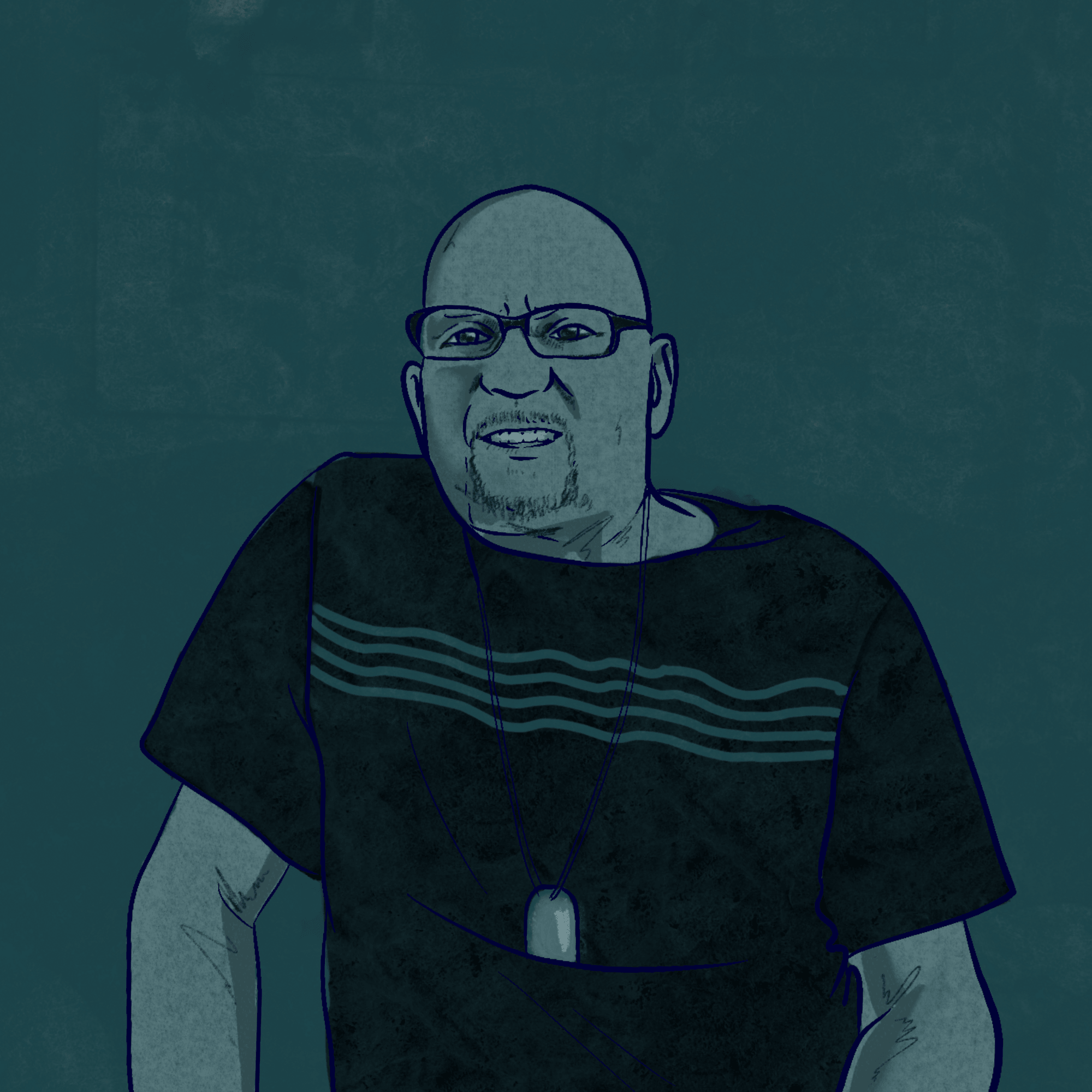
A retired postal worker, recording artist, and sober for over 20 years, Jim was born in 1951 into a Roman Catholic household in South San Francisco. After being kicked out for being gay, he found community in the Tenderloin and work at Pacific Bell. As president of the Northern California fan club for Lesley Gore, he eventually befriended the artist—“and when I found out she was a lesbian, that made it even better.”
After years of partners and relationships in Oakland, Jim found his home AA group and got clean from drugs and alcohol. He also reconciled family relationships.
This story discusses sexual assault. Please take care.
Note:
Jim Allio passed away in July of 2023. He’d written to me the previous year:
“I have a diagnosis of "very severe" COPD which caused me to stop jogging and a lot of physical activities and I was hospitalized with it four times. However, I've figured out how to manage it - for now - and haven't had an event in four years or been hospitalized in that long. Now I workout at the gym 5 days a week and do self-paced cardio each time with a system I've devised which has been working.”
May Jim’s memory be a blessing.
Hear the story
Read the story
-
My name is Jim Allio. I live in Oakland, California. I'm a Bay Area native. I was born in San Francisco in 1951 at Saint Joseph's Hospital. Raised in South San Francisco, I've been in Oakland for about 40 years. And recording artist, retired postal employee. I'm the oldest of eight. Went to Catholic school, Sera High School. My parents were Roman Catholic and very Roman Catholic, really into it. My dad was a raging alcoholic and I went to church a lot because I found it to be a safe place and I didn't have this struggle a lot of my peers do with Catholicism because I just held onto that part of it. In ways it was difficult, especially as I was discovering that I was gay and Catholicism taught us that you'd go to hell if you were gay. But for some reason, I just didn't buy that. I just I didn't have that, 'well, God made me this way.' I didn't have any stances or views on it. I just didn't believe it. And I start pursuing my journey. Before I had sexual feelings, I was different. I knew all the songs on the radio, even the adlibs. I always say I had a lot of girlfriends. I was in love with the singer, Lesley Gore. I was Northern California fan club president for her. So I was a little off. And I didn't do sports and that was a disappointment for my father at that point in time. Everything changed. I just started around 12/13, I started noticing that I was feeling an attraction toward guys, right around the time puberty hit.
I worked in the South San Francisco Public Library, so I had access to a lot of stuff. There wasn't that much out about gay life and stuff, but you could find stuff if you looked in the file cabinet. So I found books, Gore Vidal, people like that, and I read what I could. And then weirdest thing, there was a Look magazine in maybe 1965 or 6. And they had a big spread about the homosexuals in San Francisco and they talked about an organization called the Mattachine Society. So I called them on my lunch break one day. I told them I thought I might be gay, how would I know? And they said, well, they'd have somebody talk to me. Talked to this guy and then he came and met me at the library one Saturday. We talked and then he took me to his house and then I had an awful sexual encounter with him. That was my first. He was like in his 40s. I didn't really want it. Can I be really frank? He performed anal sex on me. I hated it. I thought I must not be gay. Gave up that, I'm not gay, I know that because that was, for me, it was horrible. But as the months went by, I started having those desires again. And I met a man at the library who took me into the restroom at work. And then I realized, okay, I am gay. I'm not very good at it. There are things I don't like about it, but I am. I didn't tell anybody I was gay. I was pretty young when I told people, but I didn't tell them about that for – I didn't even remember it for a lot of years.
When I was about 18, I used to sneak into the city at night. My parents would go to bed on Saturday night, I'd walk down to the freeway, catch the Greyhound bus into San Francisco and just start walking around. I knew it was there, everything was there. I used to read a paper called the Berkeley Barb and they had little sometimes things about–I would just go stand outside places and watch gay people go in and out. Then my father found some Berkeley Barbs and a couple things, he went through my desk. He was suspicious, I guess, and found stuff. And he kicked me out of the house because he thought, he didn't even know yet and I wouldn’t admit it, that I was gay. And my mother told me years later, she said, 'I didn't agree with it, but we did have 7 other children to raise.' So both those events were very hurtful. But our relationships definitely changed over the years. Then after Dad kicked me out of the house, I ended up in the Tenderloin with the girl who lived down the street who'd run away from home. She was staying in, it was called the Crane Hotel. It was on Powell Street, now it's some luxury deluxe cookalaka but then it was a fleabag hotel. She had a room there. She'd run away from home and then her mother came to San Francisco and helped her find a little studio apartment. So Mary was so happy –that was her name – when I showed up. She said, 'We can live together. I just got an apartment.' And then we had a knock on the door and was another friend of ours, Linda, and her parents had thrown her out on the same day. So here we are, 3 kids in their late teens living in the Tenderloin. You would think that would be a recipe for a lot of bad stuff. But I don't know, kind of the people in the neighborhood adopted us. They were drag queens and hookers, hustlers. They'd sleep at our house. I mean, nobody did anything, harmed us in any way. I would go out at night and I'd stand on Polk Street. Before Castro, Polk Street was the scene. I would stand in doorways and try to get picked up, successfully a lot. I began enjoying that aspect. Not as much as I did after I was in my mid-twenties, but I wanted to. And I started going to the nightclubs. The Stud was a big one. I had long hair. And we'd sit up on a bench above everything and watch. It was fascinating to watch all the guys. I barely drank. That changed quite a bit over the years. I became like my father, an alcoholic and definitely a drug addict. I was addicted to crystal methamphetamine and I drank for 30 years. I used drugs for 25. The last 10 years, I was on crystal methamphetamine. But I got sober and I'm still in recovery. I've been sober 28 years.
-
I landed a job at the phone company as a Directory Assistance Operator. And at that time, there weren't that many male directory assistance operations. But I'd be like, 'I'm Jim' – I was practicing to be an alcoholic_– 'I'm Jim. How can I help? Directory assistance.' I enjoy it. I made so many friends there, really liked it. We went out a lot but I loved drinking. I really liked Black Russians, or triple Black Russians by the end. When I was maybe 30, 27. I had caught hepatitis and they said no drinking. When I had six months and two days, I went to The Eagle and met this guy who was gorgeous and he was nice and worked on houses. He drove a truck. His name was Dennis. We met and we fell in love. And he lived in Oakland. I was always over there, so I ended up moving to Oakland with him. 1975. We really had a lot of fun. He lived in East Oakland off a High Street on Cortland Avenue behind Walgreens. And his place overlooked a creek and he had a big, beautiful yard with flowers and everything. So I lived with him there for a couple years and he had started getting into cocaine and Quaaludes and stuff like that with some girls from his job. I got him a job at the phone company. I tried cocaine. I didn't like it, and I didn't like how people changed. So I left him.
I was still working at the phone company, Dennis and I were friends, and I met this other guy named Bob. He was cholo, he was really cute and nice. We hit it off. Then we got an apartment in Oakland together on Jackson and 14th, I think. Couple of blocks from the lake. Rents were cheap, the lake was right there. It was wonderful. But he was the jealous type. And he also was doing crystal meth at that time, which I don't even know what it was really. I soon learned. So his drug use started bringing a lot of drama into our relationship. We broke up and the night we broke up, Dennis came from East Oakland and picked me up.
So Dennis's boyfriend came over one morning and he said, I have something for you. It's called crystal meth. A little plastic envelope. And he said, I got it from a nurse I've been seeing. And he said, 'so this is pharmaceutical.' I said, 'You know, I've heard bad things, I think I don't want it.' And he said, 'Oh, come on. It's amazing you'll love it.' He took out a little spoon with a tiny little–and he said, 'Let me just tap one thing into your coffee.' I swear to God that what they say is true. He tapped just this much, can't even see how much, in my coffee. Five days later, I went to sleep. And then I was like, I've learned my lesson, never again. By the time the weekend came, I wanted to do it. So 10 years went by.
I was reading an article in People magazine about AIDS. That's when I found out my first lover had died from it. I'd get so emotional. It was like a horror show. Guys, like young guys my age, people I knew, they looked like walking cadavers. I never got AIDS or anything, but I knew I would the path I was going. I was doing drugs and having a lot of random sex and the handwriting was on the wall. By then, my father had gotten sober and been sober for quite a few years. And so one day I went to an AA meeting. I thought, if I don't do something, I'm gonna lose my job, I'm gonna be homeless. I'm not cute anymore, and no one's going to take care of me. Gonna be an old drug addict, they're the worst. And so I went to this meeting in downtown Oakland called The Rap at Noon. It was everything from hookers to judges. It was amazing. There were women I knew–I was working at BART by then– there were women I recognized from BART. People would raise their hand and they'd just speak the truth. It was a lot. But I liked it. So I thought I could probably fit in. But I was too shy, I couldn't raise my hand and talk. And so someone kind of encouraged me and I did and I hated how I sounded. I had a lot of pride and a lot of fear, so I stopped going. So for the next 3 years and 9 months, I would go to meetings fitfully. And then I'd relapse and then I'd hide again. That went on for 3 years and 9 months, 9 relapses, before I kind of, they call it surrender. I call it the AA fever, it got me and saved my life. Because I'm sure I'd be dead one way or the other. That's still my home group. I've been going there for 28 years. Well, 30 something years, because it took me a while.
Now my dad's sober. And I started to see him change in some ways. Like he'd say, 'Let's go for a drive.' I'm waiting for some bullshit to happen, but he just was cool. And I said, maybe he is changing. Maybe that does work. So as I saw him change, it gave me permission to maybe start exploring that as a possibility. And then my mother got sick and died, she got cancer. No one checked in with him, they were all, he's such a son-of-a-bitch. I went over there. We're both in recovery, so I called him, 'do you wanna go to a meeting?' So we went to a meeting. And I started going over there and he'd be sitting in the family room in front of the TV with the golf channel on with the sound turned off. Smokin' Salems, sitting in his recliner just looking at pictures of my mother. My heart broke. I knew that despair. I knew that feeling of being lost, not belonging. I never thought I'd see it in my father. But there was, right in front of me. I'm sorry. And I couldn't look away. So I started going back every week for the next 5 years. And we'd go out to eat and we'd chat. And we healed, week after week. I was never expecting that I'd feel this way but I miss them both so much. So when he died, I did the eulogy. I wrote it. My siblings had asked me. There were like 600 people there. He was pretty well known. It was a great eulogy if I say so myself. People were laughing, roaring with laughter, and then crying. With all the pain, all that pain, I never thought my life would turn out this way with regards to them. And yet I lived long enough. And my dad would be like, 'Oh, my son's gay.' Like, he's almost bragging about it, you know? I saw myself in him because I had a lot of dark times. I just didn't expect it. I didn't see it coming. But we had to both be willing. We had to both be in the room and be with each other.
-
I was in love with that singer, Lesley Gore. I was in her fan club and I just loved her. And when I found out she was a lesbian, I made it even better. In the ‘60s she was all over pop radio. She had a lot of hits and she was on TV all the time on Mike Douglas, the talk shows, and Johnny Carson. She was in all the teen magazines on the cover for a few years. She would write advice articles like 'How to make the most of yourself' and stuff. They were like a Bible to me. I'd read them and I just so related. And, you know, we became friends. Oh, it's a long story. I called up her record company one day and they had a office in San Francisco, in Brisbane. I just love talking about this stuff, sorry. So all her records came out, and they were on radio right away but she was getting less popular and she came out with a song called 'Treat Me Like a Lady.' And it was not on the radio. And I was in high school at Sera High School at that point in time. On lunch, or break at school, I called up her record company and said, 'why is this record not on the radio?' I couldn't understand it. It was a young woman answered, and she was just fascinated. We started talking and she invited me up to the city for lunch. I ended up interning there. They really kind of befriended me and probably I was like a little bit interesting, you know? So I interned with them and then I met her. She played the Circle Star Theater with Tony Fields, a comedian, and John Byner. She was a middle act, she was doing nightclubs then. They got me in, Mercury got me in and got me backstage. And so I went backstage with this gay friend of mine. Her father was there with her and he's kind of stern. She was gorgeous and nice enough. There was a reporter there. He said you could only ask one question each. And Val asked her if there was any musical role she would like to do. She said, oh, the Judy Holliday part in Bells are Ringing. And he like that. And then she said, 'How about you?' And I said, 'What was it like working with Gamble and Huff in Philadelphia?' And she was like, she wasn't expecting that from this teenager. Went back and forth and she told me, you know, honestly, it wasn't my best experience. She was level with me. She worked with Quincy Jones, and she was used to Quincy giving her a lot of freedom and everything. And they just told her where to stand, how to sing, she said it was not a great experience. But we made a connection then and it lasted over the years. She would play San Francisco, the City Cabaret Club. She would want me ringside. I'd go the first night and somebody brought me backstage and she went, 'Jim Allio!' Oh, my God, she's goes, ' you're so handsome now.' She gave me a big hug. So I would be backstage after every show. She always had the most beautiful women, young women, backstage with her, like a bunch of 'em. She was fabulous. Her friends, her girlfriends, were like, let's go dancing. She said I haven't been dancing in years. Come on, they keep harping on her. She says, 'I'mona go under one condition.' They said 'what?' She puts her arm in mine and says, 'if Jim will dance with me, then I'll go.' Can you imagine, how sweet?! Just blows my mind. And so over the years she would email me or text me. The last time I saw was in New York at Feinstein's backstage.
So then I went to Laney. I said, I'm gonna take voice. And then I was writing, and we started recording. And pretty soon, I had an album called Better Late than Never. Here I am, 60. I think. It got reviewed in an East Bay Express man. It got reviewed a few places and attention was positive. And Lesley Gore was very supportive and mentoring. I'd see her she'd say 'I listened to your album, I love it.' Can't ask for much more.
After she died, I wrote a piece about her. Her mother read it and called me, which is so sweet. And by then I was recording and she told me, 'I want you to promise me next time you go in the studio, when you stand in front of the microphone, I want you to promise me you'll sing your heart out, baby.' And I was like, I know she said that to her daughter. And so a lot of really good experiences with that woman.