
Randy
Location: Paramount Theater (2025 Broadway, Oakland)
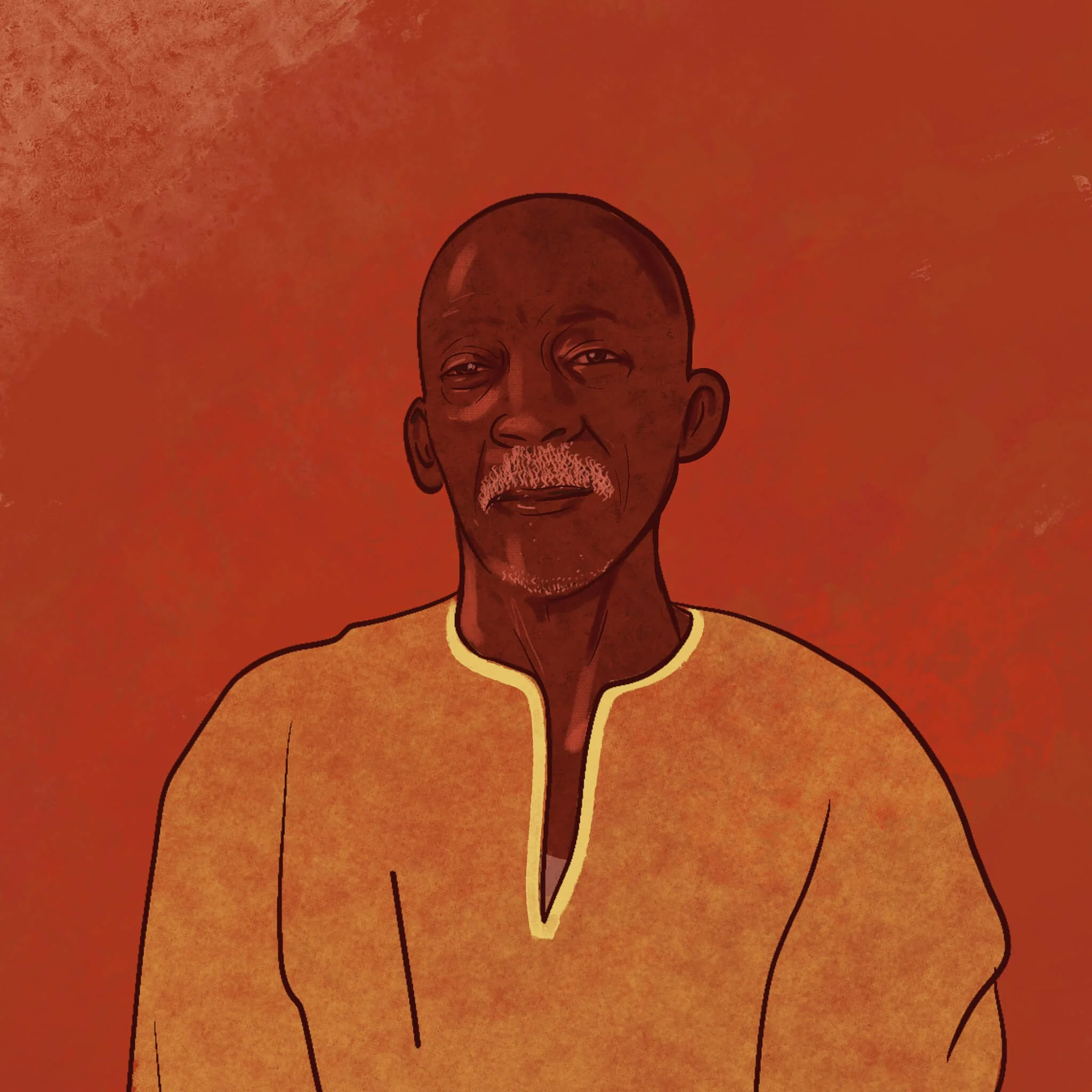
Born in Eatonton, Georgia, Randy Jordan first came to the Bay Area while serving in the military. Being here sparked his pursuit of fashion, cosmetology, and cooking. After launching his own fashion brand, he was invited to join the Ebony Fashion Show at Oakland’s Paramount Theatre as part of its annual tour. Randy has been living with AIDS since 1986, guided by a mantra of staying positive and following spirit. He first met Mali (Ernest) Andrews at Eagle Creek in San Francisco, and the two reconnected in 1995 at Cabel’s Reef in Oakland. They have been devoted life partners ever since, marrying in 2008. Their love story is truly one for the books.
Hear the Story
Read the story
-
My name is Randy Jordan. I was born in February 1950 and I was born in Eatonton, Georgia. My interest in fashion began as a child. Growing up in my neighborhood, I grew up in a time where community took care of the children and blah blah, blah thing. And the ladies, the elderly ladies, the grandmothers, the great grandmothers and great aunts would get together during the wintertime they would gather up old clothing. And then they would get together in the springtime where they sit outside and catch up with the gossip, that's what they did. And they would cut out these patterns, these quilting patterns. Then later on, during the summertime, when they sit down, they would come together, these same ladies, and they would make quilts. And I loved the way they do it so I always would watch them. And I fell in love with that. Back in the middle '50s, early '60s – we come from a very large family – would take these flour sacks that flour used to come in and they realize how poor time was. So they start to printing the fabric and the women used that to make clothing. Like with the mothers were like pleated skirt, blouses usually for their daughter. Sometimes shirts, shorts for the guys. And my mother used to do it by hand, and I would watch her do that. And I fell in love with that. And that's how I originally got into it. I was blessed because I had a mother who must have known when I was younger and instead of scolding me or put me down she nourished me. She really did. And I didn't think about that til retrospect, when I thought about my mother, how she raised me as a boy, because there's nine of us boys all together. And most of my brothers are football players, basketball players, very big macho guys. And I'm the little runt in the family. But I had asked my mother one day, I wanted this Barbie doll. I didn't want it because for clothes and stuff like that, I wanted because I was interested in hair. And there was a time when I used to go visit my elderly auntie. One morning she was getting ready for church. So I just said, I'm going to pick her clothes out. I'm going to do her hair. Never done hair before, but something just told me to do it. And I pressed it and I curled it and I did her lipstick and picked out the dress for her and showed her the pearls. When she came back from church that day, she was glowing and just happy and said, 'Oh, I got so many compliments today. I was just so happy. Oh, you just made me look so wonderful.' And I was in heaven. So that way I fell in love with hair as well.
When I left home, I was 18, almost 19. Had less than $5 in my pocket, and I left my parents house and told my father I'd never be back to live. I said I'd be back to visit, but I'd never live here again. And I reflect that my grown up was lucky because I realized what other people said, they don't have parents. I had both of my parents. So I feel blessed about that. I had 13 siblings that we love each other. We was all about love. I had a neighborhood that was all about love and protect and share. Everybody say you live in small town, everybody know your business. Lord knows that's right. I couldn't wait to get away from there [laughs]. But there was love there because we can go to anybody house and get food or water or get protected. You got protected where you didn't even want to be protected. So I grew up with a lot of love in my life and I took that love with me. So I realized the blessings in my life. Although we were really, really, really poor, we was really, really rich. We was richer than money.
When I first got out of military was in 1975, I had just turned 25. I was going to go to school and get my master's in sociology, but something was telling, pulling me the other way. And I knew I love fashion. I knew already had my hair, everything. So I decided, okay, I'm going to fashion design school. So I got back to San Francisco, you know, settle down and I got an interview San Francisco School of Fashion Design. A really nice, nice man.Oh, my God, he was superb. Just amazing. Anyway, he sat me down, we got along. But he said the only reason I'm going to accept you into the school, because we haven't had any Black people come here to graduate. He said we had a lot of Black students, don't get me wrong, and they have been really great potential. He go but for some reason nobody never graduate. So if I allow you into this school, you're going to have to graduate. And I go, Okay, oh, give me a challenge. And of course, I graduated. So in the night that I graduated, he surprised me. So when he called me to the stage and to get my degree, he said, 'I would like to tell you about the student. He is the first African American to graduate successfully from my school.' And that made me feel good. But I took on the challenge because there was no way in hell, excuse my language, that I was going to fail that in a way. No way. Absolutely wasn't going to happen [laughs].
And this happened to be in the '70s when I first got into school, I got into fashion design school at the age of 25. I don't know how those males wore tight clothing. I could not do it, tight anything. So I wanted to be loose, but elegant. And I love silk, raw silk. I love linen. I love natural fibers. I like clothes for male or women that not overly feminine, but enough to draped the body. I always thought that women had better clothing than men, not because they had dresses and things like that, but due to the color. And I thought men was being limited as of color and as to how they can wear their hair, blah, blah, blah about losing their masculinity. So that led me to like, why can't they? But then as I grew up, went out into the world and tried to live my world by my own rules. So I dressed the way I wanted to try to, androgynous. I didn't want to be feminine. I didn't want to be fully male. I just wanted to be me and comfortable. So you come to a happy medium or just pushing androgynous-zone without going over. Because I didn't want to go over, I didn't want to try to be a female. I love being a male. I just didn't want to be that male was trapped into being dictated how I dress or how I live by somebody else. If it was, I'm concerned, antiquated rules.
The Ebony fashion show used to come to the Bay Area once a year. And they used some of the local designers to help fill in. They asked us once to come and see our stuff. We showed it. They'd love it so every time they came, we were just automatic, fill in for the show. But the last show that we had at the Paramount, we did a combination of African contemporary clothes for men and women. Plus, we had some this really fabulous fabrics, beautiful fabric that we was going to make a dress out of. I made a mistake and we turned it into make underwear and did a whole swimwear set for males. And they loved it.
I really, really admire these young people today, extraordinarily, the way they just be themselves. And to hell, excuse my language again, what people think they just being themselves. And in particular the straight guy, younger guys, who have the gumption to say to hell with what they think about me. I'm not gay, but this is how I feel. I love young people allow themselves to to just to soar. And I hate when people try to kill that. It's a killjoy. And I don't think they realize in how much they are forcing children to hold back their creative talents. By keeping them back with this really antiquated old idealism that's not applicable to how we live today. And we need to rid ourselves of this.
-
When I came to San Francisco, although I realized while I was in the military that I was gay, I did not live a gay lifestyle. So I really didn't get into the gay life until I was almost 25 years old. So when I was in the military and I was in for three years, that turn ended and I decided I would enlist for three more years. When I enlisted and I told the guy, he said, 'Where do you want to be stationed?' I said, San Francisco. He said, 'That's like winning a lottery. You never get it.' So two days later, I get a phone call. 'Specialist Jordan?' 'Yeah.' 'You lucky SOB.' And I say, like what? He go, 'you got San Francisco.' And I said, Whoa, what a great – then when we came to San Francisco, I found out they did give you a stipend to live off base. A gay man in San Francisco and they paying you to live off base, what a prize [laughing]. But why I said it was a joy, it was a learning experience for me. I got a chance to meet a variety of people. Got a chance to learn a lot about myself in the gay community. It was adventurous. It was no holds bar. It was like the sexual revolution. It was crazy, but it was wonderful. But during all that sexual energy, during the summer of 1975 while I was here until, let's say around 1980, I start to realize and there was a decline. When AIDS came along, it kind of made it go somewhat faster. And I was diagnosed with HIV in 1986. And what had happened, at my job every year we have a blood donation for the bank. I did it every year. But this year, this year the Blood Bank called me and said, you need to come in. And when I came in, she said, there's something fishy about your blood. And by that time, I'd already figured that I was. And I didn't look shocked. And she said, 'Mr. Jordan, are you okay?' I said, 'I'm fine. I feel fine.' My first impression after I sit down and put all this together now that it had been confirmed first was to be angry. But I said, No, don't be angry. There's no reason to be angry. You put yourself out there. It was going to happen, so you got it. So deal with it. So, decided the best way to deal with it, to have a positive attitude. And I said to myself, okay, I have the disease, the disease don't have me. So I'm going to deal with it with a positive attitude. I didn't cry, I did not get angry, and I witnessed so many coworkers and friends that when they was diagnosed with HIV just took a negative attitude. Made some start with drugs, some with alcohol, some unfortunately with suicide. And they were saying, well why you have such a positive attitude? It was a disease like any other disease. It could be any other terminal disease. I dealt with in my life, when I was in the military, I was diagnosed with tuberculosis. I survived that. I survive with stage four lymphoma. And I said to the doctor when he said, 'Mr. Jordan, this is serious. You have stage four lymphoma. Go home and put your paperwork in order.' And I said, I will be fine. And don't take it as a disgrace or anything. Because it's just something that God give you. If that's what you believe in, that you have to deal with.
Well unfortunately, I have a lot of side effects from having HIV. I had lost my spleen, splenectomy. When the HIV drugs first come out with the AZT? So I did not take any medication for about, almost ten years. I saw what it did to so many friends and coworkers, and I didn't want to put my body through that. If I were to die naturally, then okay I would take that chance. The medication now is much better. Eight years ago, when I was really ill and I had got pneumocystis pneumonia, my system started breaking down and they put me on an experimental drug. And my T cells were very low and my viral load was just all shot. But at the first two weeks of taking that medication, my viral load went from a million to undetectable. And here nine years later, I'm still undetectable. That's what I was waiting for.
So I feel that in this life that also my purpose is to meet people and they tell me how I touched a life when I don't even realize that I have. So I think my thing, want people to remember me that what I'd done for them, even if it's unknowingly done for them. And one of the things that I hope people continue to remember me by is the fact that I will always be myself. I dress androgynous and I push the rules. Even when at work, I pushed the rules. When in the military, I push the rules. That's the type of person I am. But when we get older, we think of mortality more because we live in a society whereas, particularly in America, when you get a certain age, you just swept aside. In a way they treat you as a senior citizen is a whole new thing that most young people don't know about. How you are relegated if you allow it, to live in an unwanted situation, if you're not an outspoken person. To me, my life have always been positive because I was raised up in a positive atmosphere. And I've been to a point in my life where if I'd allowed myself to go into despair and self-pity and sorrow into a negative place, I would have died years ago. And it's okay to stay positive, even when the worst thing in your life happen, the most unfathomable thing in your life happen. You can survive that if you can find a light. Just a pin light, not a bright blah, blah, blah. But just a pin light. That can get you through. But you have to focus on the light.
-
Mali: Like I said, I came here in 1981 and in 1983 I was chosen by UCSF's AIDS Health Project to be the Youth and AIDS Director for the Youth and AIDS Project. And one of the things that was missing was that there wasn't anything targeting people of color. So I went to the AIDS Health Project and told them that I would be willing to start a group. We called them the Worried Well. I went around trying to recruit people in the group, and one night I went to this bar that used to exist called the Eagle Creek. And Randy was one of the patrons in the bar. At that time, we actually both were involved in a relationship, so that was our first actual meeting and I talked to him about being part of the group. I actually didn't see him for many, many years after that until 1995. Then you can tell.
Randy: Okay. As time went by, we both had different relationships and such. And I wasn't basing it on that, but I always felt his spirit. I had worked a job that was a very high pressure job. Besides designing I worked for the Veterans Administration as a supervisor, so I had a lot of stress. So that day I decided, I would go out and have a drink. When I got to the bar, he was sitting there. And I said, 'Ernest Andrews?' And he said, 'yes.' And we had a casual conversation. He invited me over and we talked. And we've been together basically ever since.
Mali: The universe obviously had plans for us 'cause we were circling each other like satellites for years. [both laugh] Okay. And, you know, after that first meeting. And then eventually in '95, we got together and then 2008, I asked him to marry me.
Randy: No, before then.
Mali: Well, it was before that we got married 2008. [both laugh] Well, that's what I mean, it didn't actually happen until 2008.
Randy: But it wasn't a mistake. Trust me.
Mali: Will be 24 years a mistake [laughs].
Randy: I said it wasn't a mistake babe.
Mali: Well, first of all, he was black and beautiful. That was the first thing that attracted me to him. And the fact that he was an artistic person in his soul. I mean, he's just that way. It was home with him. Then sex was off the chain. So I'm just like, wow, this is amazing. And then I can sit down and talk to him about the variety of things, especially around the emotional things that I was dealing with, being a HIV advocate in the craziness of all the racism and all the other crazy stuff. He was like my refuge, you know? I could tell him about those kind of things.
Randy: I love his bluntness. He's blunt to a fault. I love that he's open minded. I love that he get along with people. He do not mind trying new things. He's easy to talk about on a variety of subjects so could have a wonderful conversation. And is good to be with him and we can have quiet time and I'm not worried that something is wrong. And that's things that attracted me. And the fact that he's an alpha male and I'm very attractive to alpha. So that's some of the things that was attracting me to him.
Mali: I mean, at that time, I was pretty sure that this is it. I didn't know how long he would be here or how long I would be there.
Randy: And that was irrelevant.
Mali: Well, actually wasn't irrelevant for me because my whole life changed once I was diagnosed. I had big savings, I began to spend it. Sold one of my insurance policies, you know what I mean? I did a lot of things based on the fact that I probably would make it to 50. And then 50 came.
Randy: [Laughs] and then 60.
Mali: Okay?! Oh my God, I'm still here. Randy was going through some changes then, but he was still here.
Randy: I had just had my spleen removed and diagnosed with lymphoma.
Mali: So I said, okay, well then that's what it is. I'm supposed to be here for him. He's supposed to be here for me. So, we going to be here awhile. Just came to grips with that. It was like a revelation.
Randy: Well, we were already engaged, but one of the reasons we got married when we did, because I was going in for a hip replacement.
Mali: Well that ain't the reason.
Randy: Well, no, no, no. Listen to me.
Mali: [Laughing] Okay.
Randy: A lot of times, I went to the hospital, he could not go with me because we was not married. And they would not allow him into the O.R. to see me.
Mali: Right.
Randy: So he said when I was going into hip surgery, we're not going through that again. So why don't we just get married before you go into surgery. Which was three days before I went into surgery. But we were going to get married anyway, we just hadn't set a date.
Mali: I realized the impact that we had on other people just being present. And then I realized that that was something special. And even to this day, how people come up to us and say, you know, we are so happy to see you guys. The fact that you guys are still together and you have no idea how much of a role model you guys are for us. And then there was a group called The Dinner Club, and they selected us as the couple of the year maybe about 5 years ago. The impact that we have on just living our lives is a contribution in itself.
Randy: And I just happened to be a lucky person because I have met the love of my life. And I know for me that it's luck. And it's a blessing. And I appreciate it and realize without getting stuck on my own mortality, that at any second it can be taken away. So that made me love more intensely, even more. It allows me to say the things that I don't want to say.,I wished I had ta say it to him. So sometimes he may get sick of me saying, I love you. I don't saw it for a response. I'm just saying it because it was in my heart and I need to say it. And if you going away, I don't wanna say I wished I woulda tell him I love you. You know I love you. And I have no shame in saying it because I do.