Cathy
Serving: Atole Negro, Caldo de Lamb
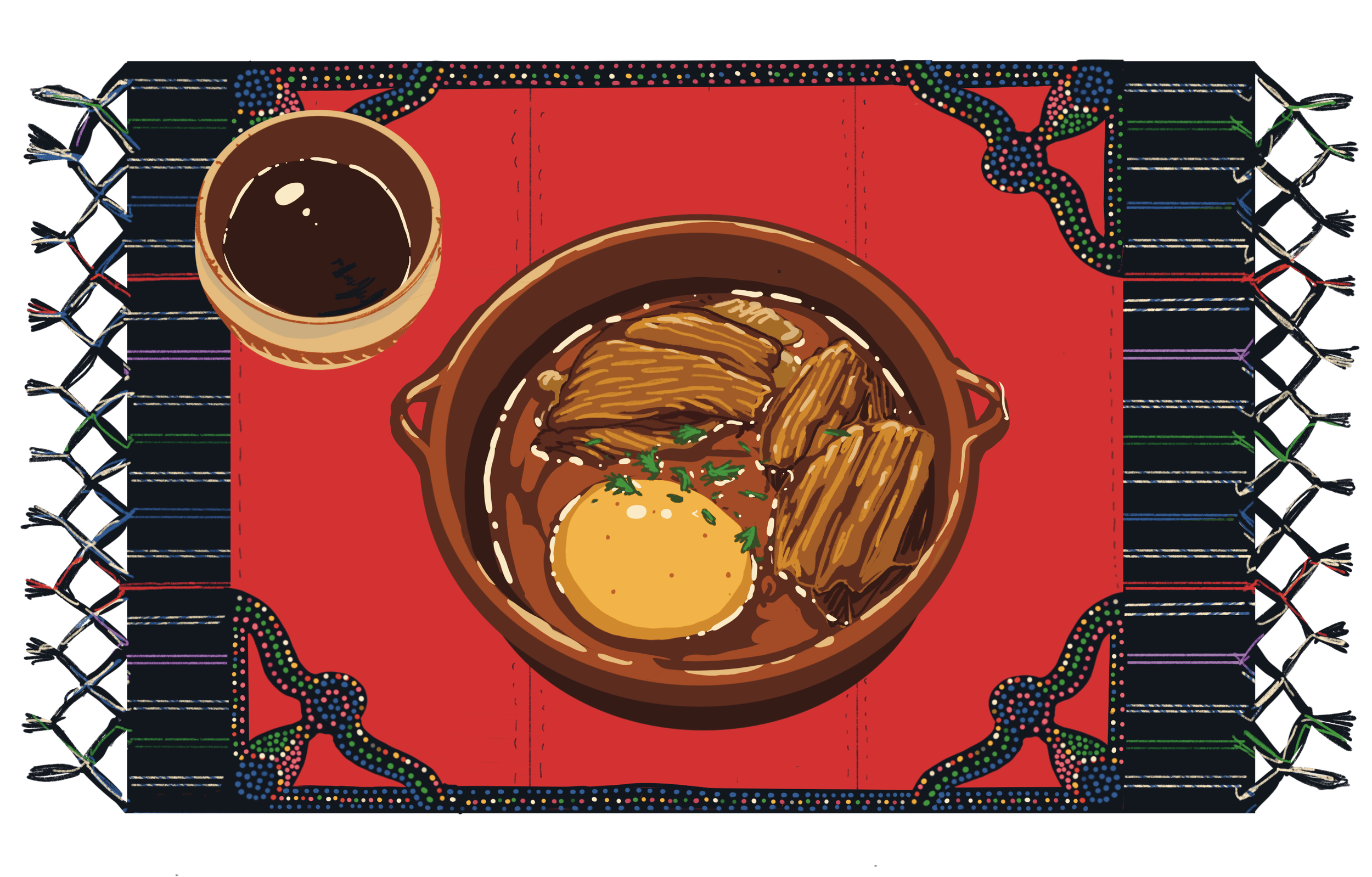
Artwork by Rami KD
Hear their story
Read the Transcript
**Cathy’s dialect of Mam is only spoken so a text translation is not available
-
Cathy: We are in my backyard, where we rent. So my dad created this backyard because he wanted something for us to be more relieved outside, to cook, to have freedom, so the kids can play. Because in our country, you can cook inside, but it's much better when you are outside. The food is more delicious, you share with the family, with the neighbors. So it's more traditional to be outside cooking.
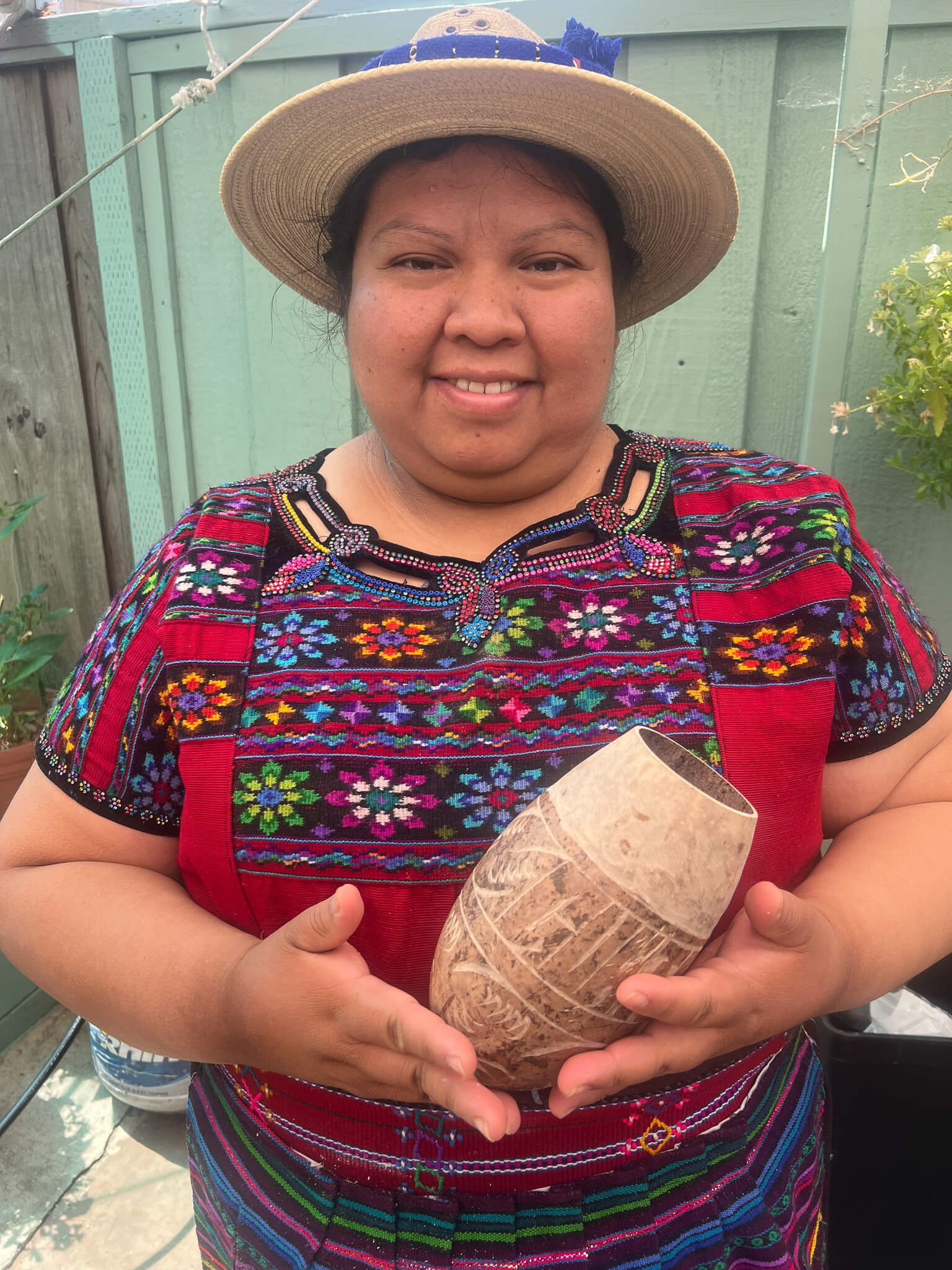
[words in Mam] My name is Catarina Mendoza Ramirez. I was born in Todos Santos, Huehuetenango, Guatemala in 1993. I’m an immigrant. Daughter. I arrived here when I was four years old, and I still conserve my family's tradition, food and drink. So this is my mom’s garden. There’s some cilantro that she is planting over there and I have some on my table that is already cut. We'll use that for the food.
So this is what I am doing today. Caldo de Lamb, soup of lamb, from Todo Santos and talq’b’a. I already put the lamb inside of the pot and now it’s cooking. The smell is coming out, it smells, lamb. And then on the other side, I have another pot with hot water where I'm going to put the traditional drink. We call it, in Spanish, it’s called Atol Negro, but in our language it’s called talq’b’a. I love it, it's one of my favorite drinks.
Esmeralda: I don't know if she told you, but this drink, it's used on only special occasions. If a house is built, 20 days after the baby is born. Also, weddings, baptisms, and the Total Santos Festival. So it's really traditional when you drink it.
Cathy: Yeah, so that's my sister.
Esmeralda: My name is Esmeralda Mendoza. I am the sister of Cathy.
Cathy: I started cooking when, since I was ten. I was taking care of my sisters. My mother had to work, with my dad. I was not an expert, but I was like, I need to have food ready for my parents when they come tired, so they can eat.
When we sit down in the kitchen, when we eat, some story comes out like, the guerra, in 1982, and how they, my dad, how he ran out in the mountains, and how my mother stayed with her mom. She was sick in the bed, until the soldados came. She made some tortillas, that’s how they didn’t harm her. They were very hungry too, the soldados, they were looking for the guerrilleros. When they thought the indigenous people were the guerrilleros, they ran into the mountains to survive. And that’s how our people spread.
When I arrived, it was in 1999. There were not many Mam speakers. It was just Latinos, like Mexican or other places.
Esmeralda: We didn't really used to speak Mam, only at home because outside we were scared.
Cathy: I remember my dad used to work for a Mexican guy, and he told my dad, “if you're going to speak your language here, that means I need to fire you”.
[Speaks in Mam. Thank you] So we still use our traditional language to our nephews because we want them to conserve it.
Esmeralda: Now that our whole community is coming here, Mam is getting known here in the Bay Area. Now we’re like, we feel proud. Now we’re like speaking Mam all the time in the streets, in the stores.
Cathy: The cilantro smells so good…I’m a Mam coordinator. We educate our community who speaks Mam of the things they have. And now I’m helping more my community. I’m very proud of that, I’m very proud of what I am doing right now.
I will give you to try, the Atol. Drink slowly and then you need to drink four times like [speaks Mam].
Nephew: speaks Mam phrase.
Esmeralda: We are Maya Mams. We have our roots, we have our language. We are here! We exist.
Cathy: I’m happy here. I’m happy to continue helping my community and I think its, I’m doing a good job here. I think they need me here more than in my country, and also all my family is here, my nephews are here. We’re happy here.
[speaks Mam]
-
Cathy: Estamos en mi patio trasero, donde alquilamos. Entonces mi papá creó este patio porque quería algo para que estuviéramos más tranquilos afuera, para cocinar, para tener libertad, para que los niños puedan jugar. Porque en nuestro país puedes cocinar adentro, pero es mucho mejor cuando estás afuera. La comida es más deliciosa, compartes con la familia, con los vecinos. Entonces es más tradicional cocinar afuera.
[palabras en mam] Mi nombre es Catarina Mendoza Ramirez. Nací en Todos Santos, Huehuetenango, Guatemala en 1993. Soy inmigrante. Hija. Llegué aquí cuando tenía cuatro años, y todavía conservo la tradición, la comida y la bebida de mi familia. Entonces este es el jardín de mi mamá. Hay cilantro que ella está sembrando allá y yo tengo un poco en mi mesa que ya está cortado. Lo vamos a usar para la comida.Entonces esto es lo que estoy haciendo hoy. Caldo de cordero, sopa de cordero, de Todos Santos y talq’b’a. Ya puse el cordero dentro de la olla y ahora se está cocinando. El olor está saliendo, huele a cordero. Y luego, al otro lado, tengo otra olla con agua caliente donde voy a poner la bebida tradicional. La llamamos, en español, atol negro, pero en nuestro idioma se llama talq’b’a. Me encanta, es una de mis bebidas favoritas.
Esmeralda: No sé si ya te dijo, pero esta bebida se usa solo en ocasiones especiales. Si se construye una casa, 20 días después de que nace el bebé. También en bodas, bautizos y el Festival de Todos Santos. Entonces es muy tradicional cuando la tomas.
Cathy: Sí, ella es mi hermana.
Esmeralda: Mi nombre es Esmeralda Mendoza. Soy la hermana de Cathy.
Cathy: Empecé a cocinar cuando tenía diez años. Estaba cuidando a mis hermanas. Mi mamá tenía que trabajar con mi papá. No era experta, pero pensaba, necesito tener comida lista para mis padres cuando lleguen cansados, para que puedan comer.
Cuando nos sentamos en la cocina, cuando comemos, salen historias como la guerra, en 1982, y cómo ellos, mi papá, cómo huyó a las montañas, y cómo mi mamá se quedó con su mamá. Ella estaba enferma en la cama, hasta que llegaron los soldados. Ella hizo algunas tortillas, así fue como no le hicieron daño. Ellos también tenían mucha hambre, los soldados, estaban buscando a los guerrilleros. Cuando pensaban que los indígenas eran los guerrilleros, corrían hacia las montañas para sobrevivir. Y así fue como nuestra gente se dispersó.
Cuando llegué, fue en 1999. No había muchos hablantes de mam. Solo había latinos, como mexicanos u otros lugares.
Esmeralda: Antes no solíamos hablar mam, solo en casa porque afuera teníamos miedo.
Cathy: Recuerdo que mi papá trabajaba para un hombre mexicano, y le dijo a mi papá: “si vas a hablar tu idioma aquí, significa que tengo que despedirte”.
[Habla en mam. Gracias] Entonces todavía usamos nuestro idioma tradicional con nuestros sobrinos porque queremos que lo conserven.
Esmeralda: Ahora que toda nuestra comunidad está llegando aquí, el mam se está dando a conocer aquí en el Área de la Bahía. Ahora nos sentimos orgullosos. Ahora hablamos mam todo el tiempo en las calles, en las tiendas.
Cathy: El cilantro huele tan bien… soy coordinadora de mam. Educamos a nuestra comunidad que habla mam sobre las cosas que tienen. Y ahora estoy ayudando más a mi comunidad. Estoy muy orgullosa de eso, estoy muy orgullosa de lo que estoy haciendo ahora mismo.
Te voy a dar a probar el atol. Bebe despacio y luego tienes que beber cuatro veces como [habla en mam].
Sobrino: habla frase en mam.
Esmeralda: Somos mayas mam. Tenemos nuestras raíces, tenemos nuestro idioma. ¡Estamos aquí! ¡Existimos!
Cathy: Estoy feliz aquí. Estoy feliz de seguir ayudando a mi comunidad y creo que estoy haciendo un buen trabajo aquí. Creo que me necesitan más aquí que en mi país, y también toda mi familia está aquí, mis sobrinos están aquí. Estamos felices aquí.
[habla en mam]